


A Quality Indices Modeling Method for Multirate Industrial Processes With Difficult-to-Measure Time Delay
-
摘要: 实际工业数据因检测方式不同, 过程变量与质量指标往往采样速率各异, 受低采样率数据影响, 可有效利用的样本稀缺, 传统建模精度难以提升. 此外, 因过程响应特性及传感器部署分布差异使各过程变量相对最终产品质量指标存在不同程度时滞, 但实际现场无法进行阶跃测试使得过程时滞难以测量, 进一步增加了建模难度. 为此, 本文提出一种面向多速率难测时滞工业过程的质量指标建模方法, 该方法首先设计基于核Copula熵的数据依赖结构时滞估计方法, 通过核Copula熵定量分析过程数据依赖结构关联强度, 将时滞参数估计问题转化为寻找最大依赖结构关联度问题, 引入专家经验约束依赖结构寻优过程, 保证时滞参数符合工业现场情况并修正数据时序对应关系. 进一步, 提出一种多速率采样数据时空约束网络模型, 该模型通过融合数据的时序特性与空间关联性, 构建时序因果的邻近样本质量指标的时空距离相似度约束矩阵, 据此充分挖掘无质量指标标签样本信息辅助模型构建, 提升软测量建模精度, 并且证明了网络模型的收敛性. 最后, 基于数值仿真和实际磨矿数据工业实验验证了所提方法的可行性和有效性Abstract: In actual industrial processes, variations in detection methods often result in differing sampling rates between process variables and quality indices. Such multirate data characteristics lead to a scarcity of usable samples with quality index labels, posing significant challenges for traditional modeling approaches in achieving high accuracy. Furthermore, process variables frequently exhibit varying degrees of time delay relative to quality indices due to diverse process response characteristics and sensor distributions. The impracticality of conducting step tests under field conditions further complicates the accurate measurement of these delays. To address these issues, this paper proposes a quality index modeling method for multirate industrial processes with difficult-to-measure time delays. First, a data dependency structure time-delay estimation approach based on kernel copula entropy is developed. By quantitatively assessing the strength of dependency structures, this approach transforms time-delay estimation into an optimization problem of finding the maximum dependency structure. This optimization is further constrained by expert knowledge to ensure industrial plausibility and facilitate temporal data alignment. Subsequently, a Multirate Sampled-data Spatiotemporal Constrained Network is designed. By fusing the temporal characteristics and spatial correlations of causally related samples, this network constructs a constraint matrix to effectively utilize abundant samples without quality index labels for model construction. The convergence of the proposed method is theoretically demonstrated. Finally, comprehensive numerical simulations and industrial case studies on grinding process data validate the feasibility and superiority of the proposed method.
-
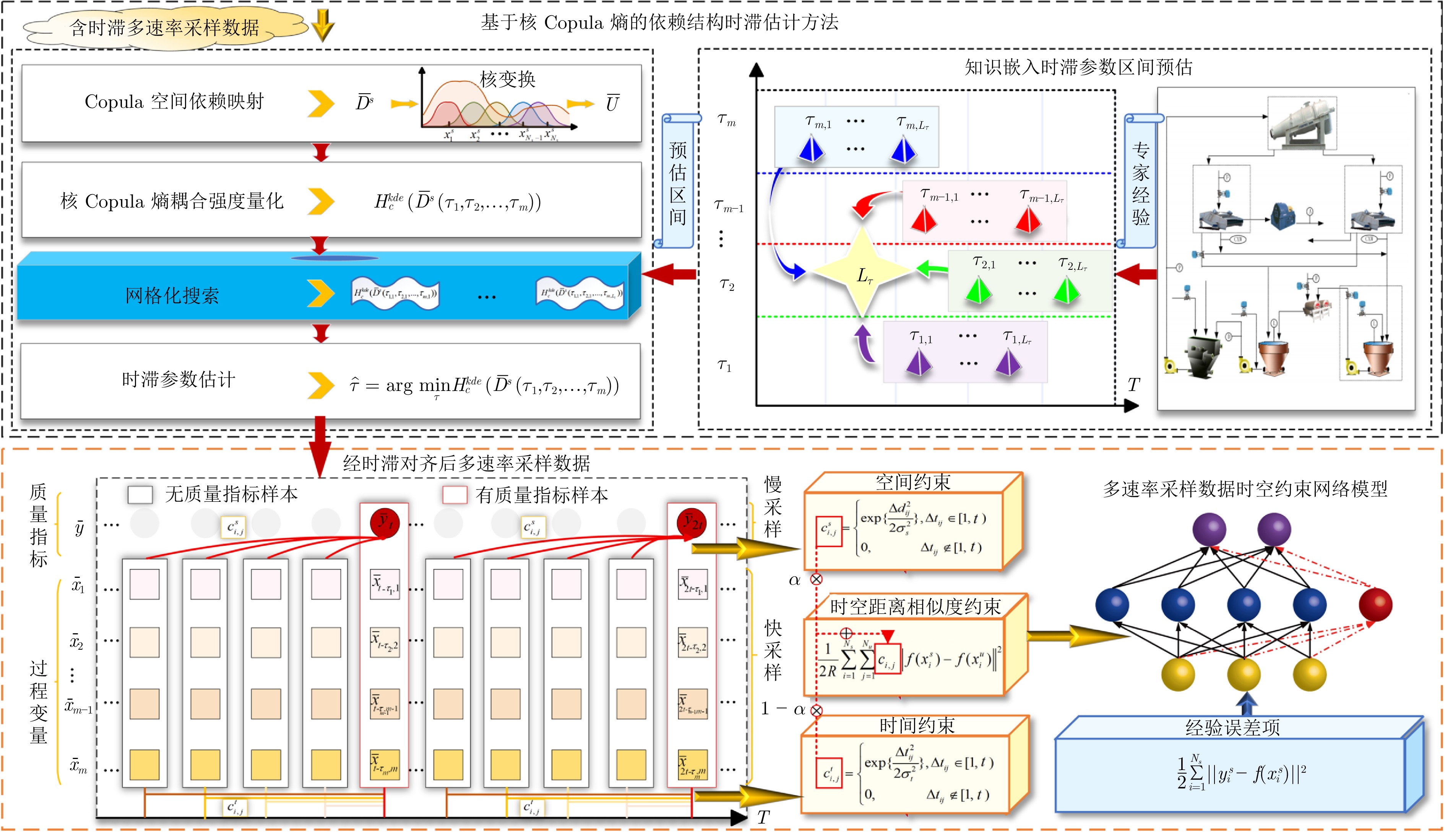
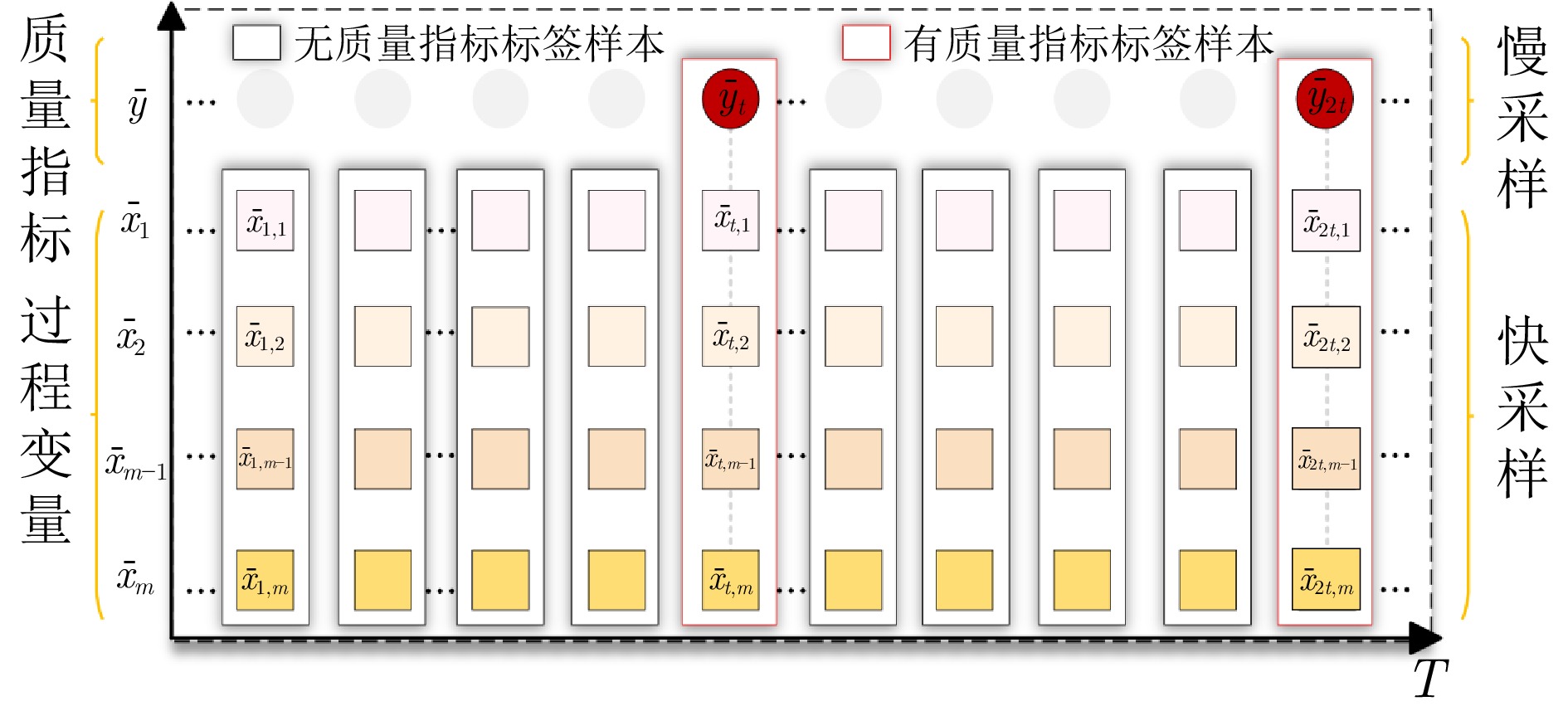
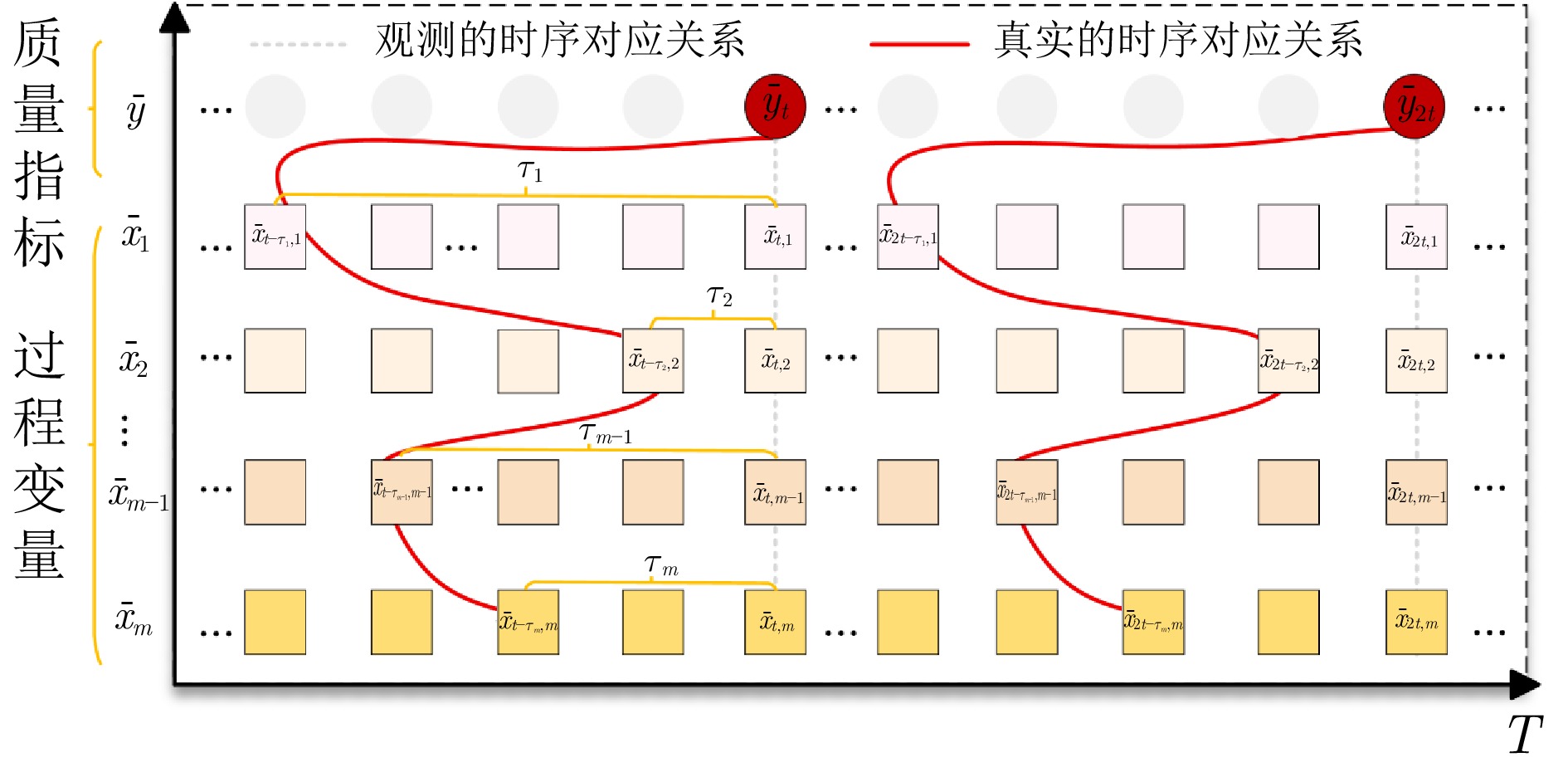
图 3 多速率难测时滞工业过程的质量指标建模方法流程图
Fig. 3 Schematic diagram of quality indices modeling methods for multirate industrial processes with difficult-to-measure time delay
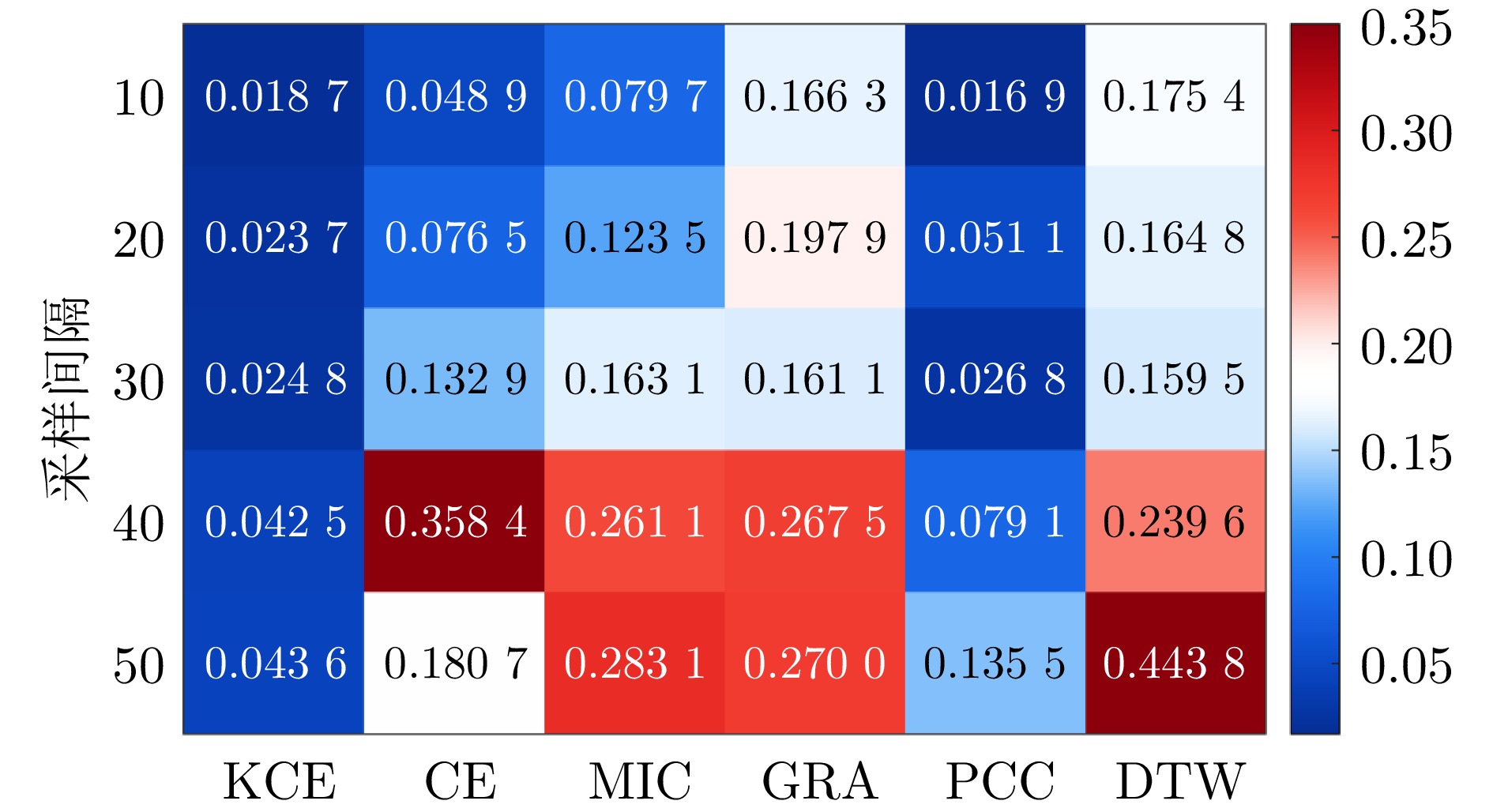
图 5 不同采样间隔下时滞参数估计方法结果对比
Fig. 5 Performance comparison of time-delay estimation methods for multiple sampling rates
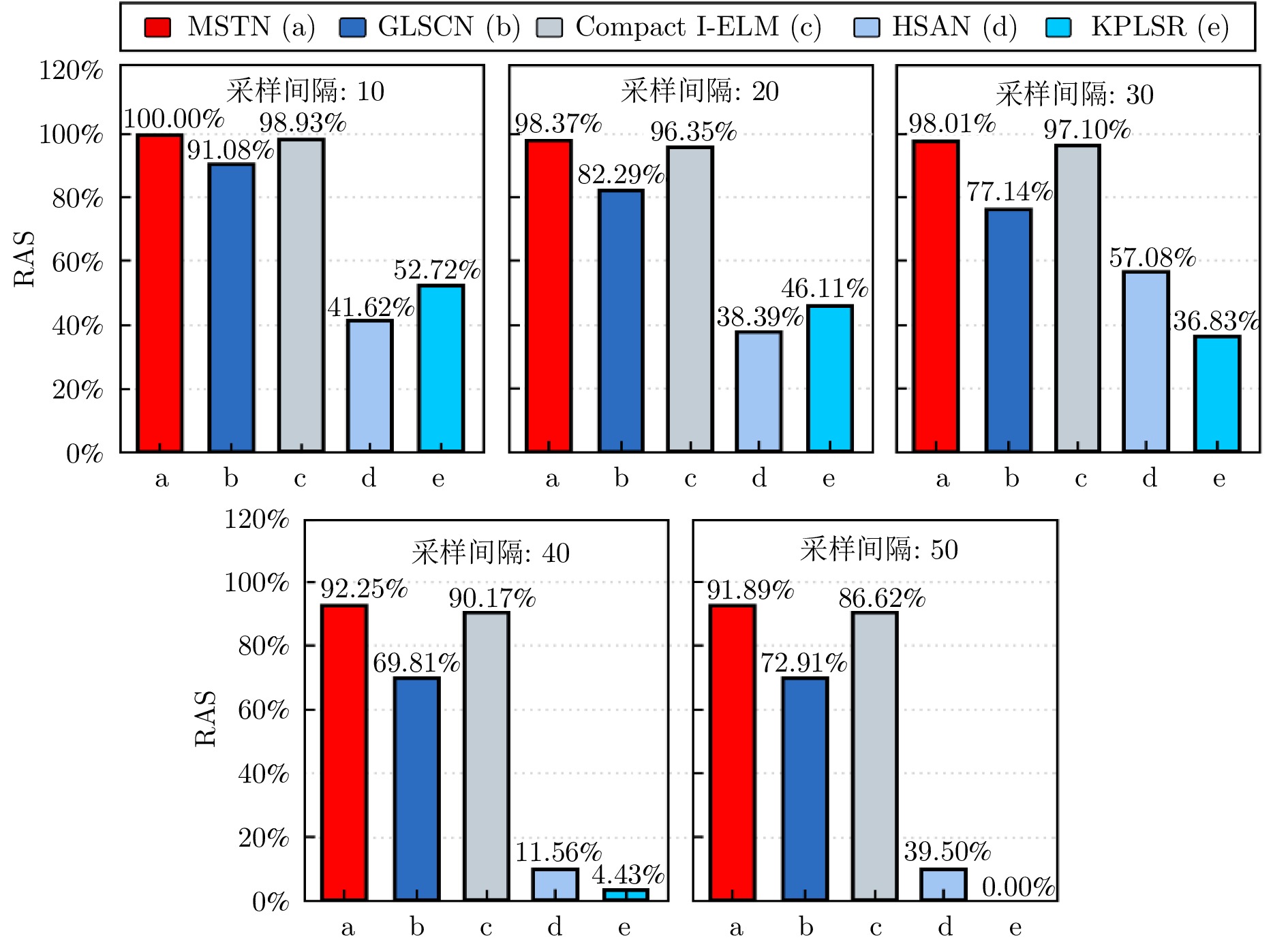
图 6 不同采样间隔下软测量建模方法结果对比
Fig. 6 Performance comparison of soft sensor modeling methods for multiple sampling rates
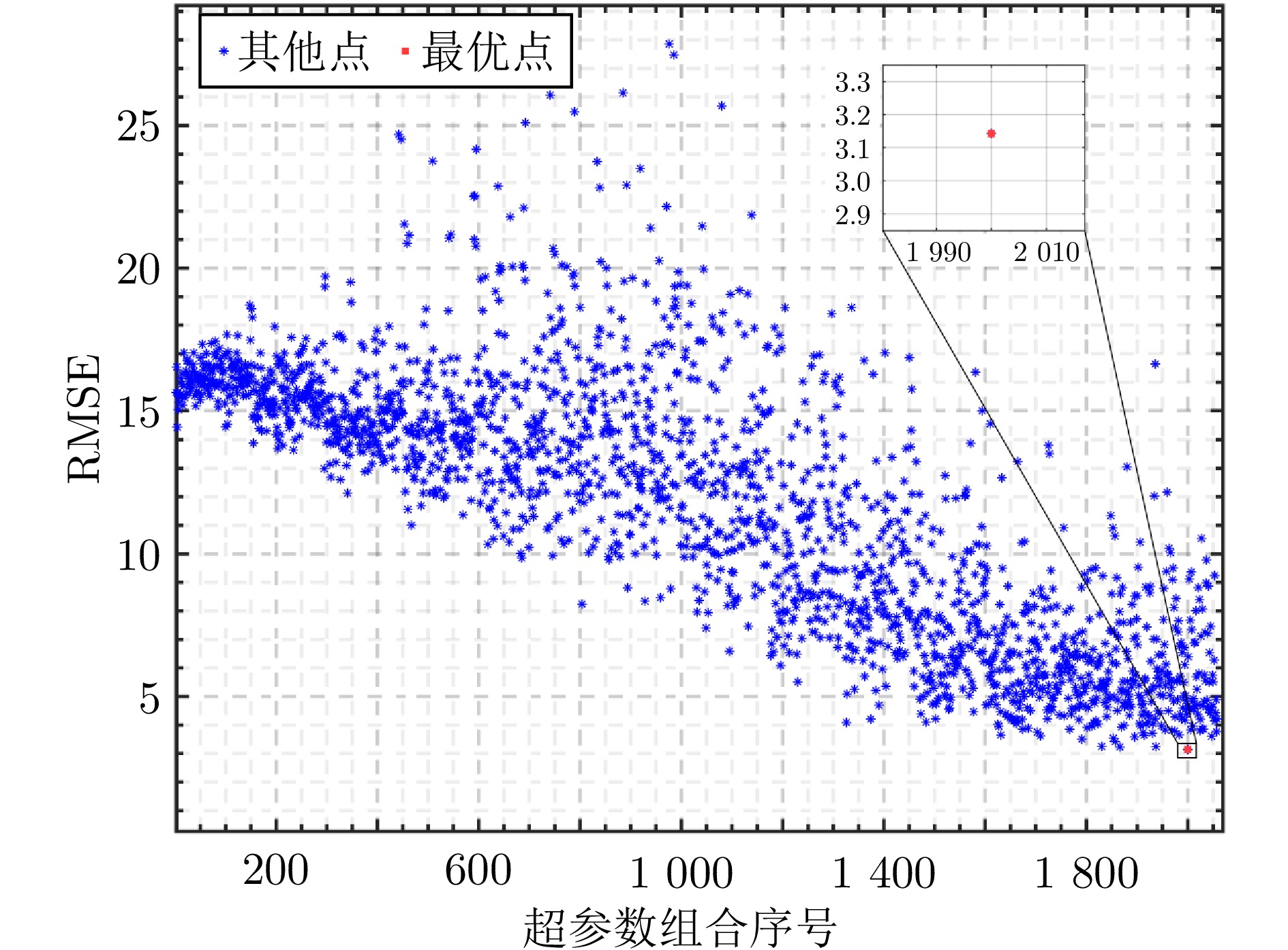
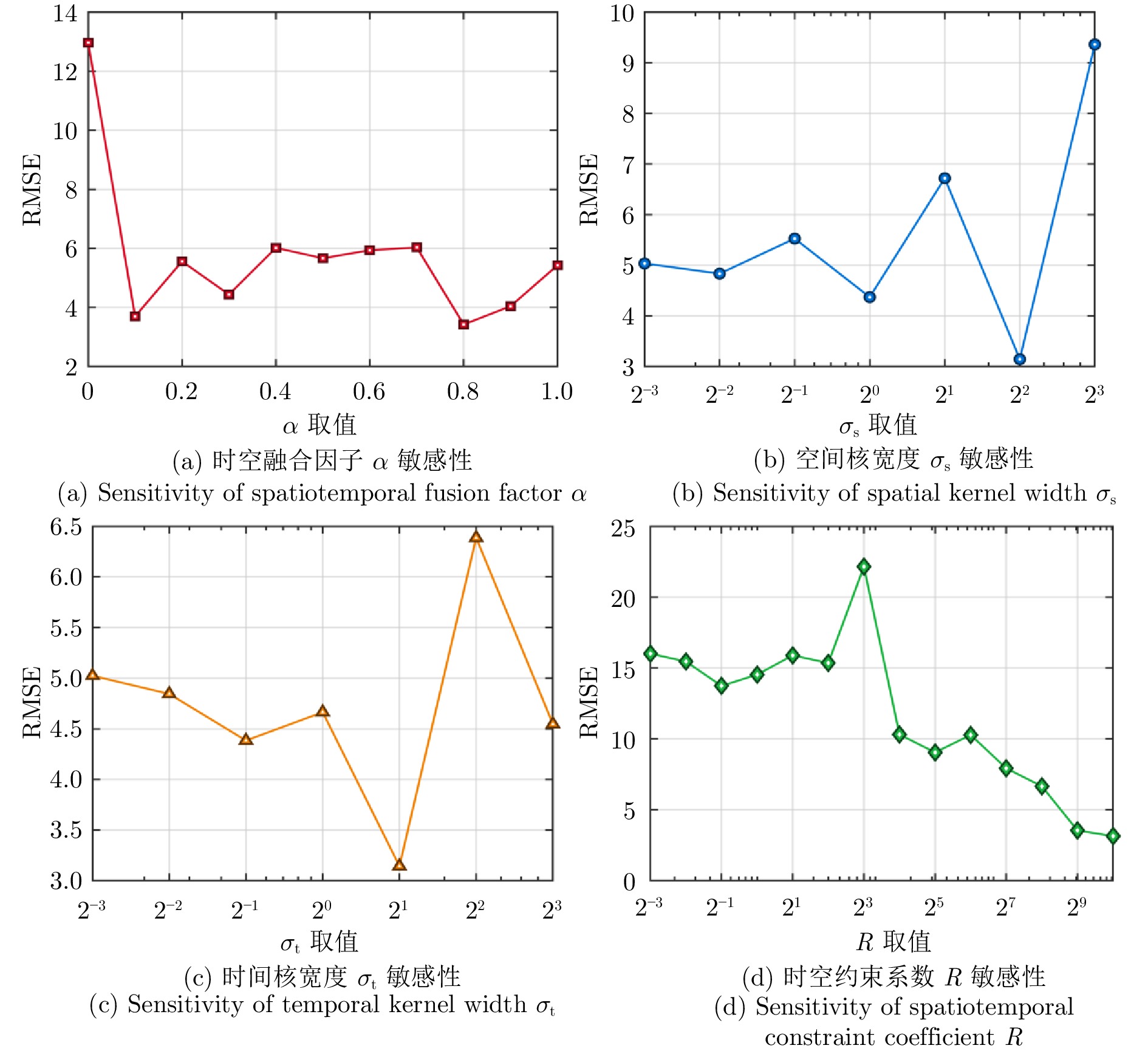
图 7 磨矿数据最优参数组合寻优过程
Fig. 7 Optimization process for the optimal parameter combination in grinding data

图 8 磨矿数据软测量建模方法拟合效果对比
Fig. 8 Fitting performance comparison of soft sensor modeling methods for grinding data
表 1 所提方法与对比方法的参数设置
Table 1 Parameter settings of the proposed and compared methods
类别 符号 参数说明 取值或搜索范围 通用设置 $ N_h $ 隐藏层节点数 10 $ Ratio $ 训练/验证/测试比例 5:2:3 $ T_{max} $ 随机参数尝试次数 10 MSTN $ \alpha $ 时空融合因子 $ \{0.7,\; \dots,\; 1.0\}_{\Delta=0.1}^\dagger $ (本文方法) $ \sigma_s $ 空间核宽度 $ \{2^k \mid k \in [-3,\; 3]\}^\dagger $ $ \sigma_t $ 时间核宽度 $ \{2^k \mid k \in [-3,\; 3]\}^\dagger $ $ R $ 时空约束系数 $ \{2^k \mid k \in [-3,\; 10]\}^\dagger $ GLSCN $ C $ $ L_2 $正则化系数 $ 10^{-6} $ $ R_g $ 流形正则化系数 500 $ U $ 一致性正则化系数 0.001 HSAN $ lr $ 学习率 0.001 $ Epoch $ 训练循环次数 50 $ Batch $ 训练批大小 5 $ h_{lstm} $ LSTM隐藏层维度 10 KPLSR $ \sigma_{ker} $ 高斯核带宽 中位数法 $ PCs $ 主成分数 4 $ ^\dagger $详细最优值见表2及第4.3节.  下载: 导出CSV
表 2 不同采样间隔下最优参数组合
Table 2 Optimal parameter combinations for multiple sampling rates
间隔 R $ {\boldsymbol{\alpha}} $ $ {\boldsymbol{\sigma_s}} $ $ {\boldsymbol{\sigma_t}} $ 10 1024 0.7 1 4 20 1024 0.9 0.125 2 30 1024 0.8 0.5 0.125 40 1024 0.9 0.125 0.25 50 512 0.8 0.125 4
下载: 导出CSV
表 3 磨矿数据时滞估计结果对比
Table 3 Comparison of time-delay estimation results for grinding data
$ x_1 $ $ x_2 $ $ x_3 $ $ x_4 $ 耗时(s) 实际情况 10 19 65 5 — KCE 13 19 70 5 686.32 CE 13 12 70 12 437.57 MIC 10 12 69 11 1349.09 GRA 14 13 60 6 418.06 PCC 11 22 66 11 431.47 DTW 8 14 62 15 3422.11 “-”表示该项为专家经验基准值, 故不存在算法计算耗时.
下载: 导出CSV
表 4 磨矿数据软测量建模方法性能与计算耗时对比
Table 4 Performance and computation time comparison of soft sensor models for grinding data
RMSE MAE OV 训练时间(s) 测试时间(s) MSTN 4.2546 $ \pm $0.6891 3.2662 $ \pm $0.3388 3.7779 4.6342 0.0020 GLSCN 4.3844 $ \pm $0.5384 3.2897 $ \pm $0.2866 3.8390 69.0924 0.0022 Compact IELM 4.4222 $ \pm $0.5996 3.3955 $ \pm $0.3605 3.8564 0.0132 0.0021 HSAN 4.3975 $ \pm $0.5416 3.4495 $ \pm $0.4888 3.4314 5.2418 0.3085 KPLSR 5.6425 $ \pm $0.0000 4.2282 $ \pm $0.0000 5.6425 0.0467 0.0012
下载: 导出CSV
表 5 磨矿数据消融实验
Table 5 Ablation study results for grinding data
评价指标 MSTN KCE+MSTN KCE+IRWNN RMSE 4.4034 $ \pm $0.5371 4.2546 $ \pm $0.6891 4.3400 $ \pm $0.7244 OV 3.8400 3.7779 3.7880
下载: 导出CSV
-
[1] 阳春华, 孙备, 李勇刚, 黄科科, 桂卫华. 复杂生产流程协同优化与智能控制. 自动化学报, 2023, 49(3): 528−539 doi: 10.16383/j.aas.c220737Yang Chun-Hua, Sun Bei, Li Yong-Gang, Huang Ke-Ke, Gui Wei-Hua. Cooperative optimization and intelligent control of complex production processes. Acta Automatica Sinica, 2023, 49(3): 528−539 doi: 10.16383/j.aas.c220737 [2] 丁进良, 杨翠娥, 陈远东, 柴天佑. 复杂工业过程智能优化决策系统的现状与展望. 自动化学报, 2018, 44(11): 1931−1943 doi: 10.16383/j.aas.2018.c180550Ding Jin-Liang, Yang Cui-E, Chen Yuan-Dong, Chai Tian-You. Research progress and prospects of intelligent optimization decision making in complex industrial process. Acta Automatica Sinica, 2018, 44(11): 1931−1943 doi: 10.16383/j.aas.2018.c180550 [3] Huang K K, Wu S J, Li Y G, Yang C H, Gui W H. A multi-rate sampling data fusion method for fault diagnosis and its industrial applications. Journal of Process Control, 2021, 104: 54−61 doi: 10.1016/j.jprocont.2021.06.003 [4] Yuan X F, Feng L, Wang K, Wang Y L, Ye L J. Deep learning for data modeling of multirate quality variables in industrial processes. IEEE Transactions on Instrumentation and Measurement, 2021, 70: 1−11 [5] Xie S, Wang H Z, Peng J C, Liu X L, Yuan X F. A hierarchical data reconciliation based on multiple time-delay interval estimation for industrial processes. ISA Transactions, 2020, 105: 198−209 doi: 10.1016/j.isatra.2020.06.001 [6] Lindfors M, Chen T S. Regularized LTI system identification in the presence of outliers: A variational EM approach. Automatica, 2020, 121: Article No. 109152 doi: 10.1016/j.automatica.2020.109152 [7] Turkulov V, Rapaić M R, Malti R. Stability analysis of time-delay systems in the parametric space. Automatica, 2023, 157: Article No. 111220 doi: 10.1016/j.automatica.2023.111220 [8] Odorico E K, Terra M H. Robust regulation of discrete-time systems subject to parameter uncertainties and state delay. Automatica, 2023, 156: Article No. 111179 doi: 10.1016/j.automatica.2023.111179 [9] 蒋珂, 蒋朝辉, 谢永芳, 潘冬, 桂卫华. 基于时序关联矩阵的高炉冶炼过程多重关联时延估计方法. 自动化学报, 2023, 49(2): 329−342 doi: 10.16383/j.aas.c220091Jiang Ke, Jiang Zhao-Hui, Xie Yong-Fang, Pan Dong, Gui Wei-Hua. A multi-correlated time-delay estimation method in the blast furnace ironmaking process based on time-series correlation matrix. Acta Automatica Sinica, 2023, 49(2): 329−342 doi: 10.16383/j.aas.c220091 [10] Offermans T, van Son B, Bertinetto C G, Bot A, Brussee R, Jansen J J. Data-driven sensor delay estimation in industrial processes using multivariate projection methods. Chemometrics and Intelligent Laboratory Systems, 2024, 246: Article No. 105090 doi: 10.1016/j.chemolab.2024.105090 [11] Cattaldo M, Ferrer A, Måge I. Variable time delay estimation in continuous industrial processes. Chemometrics and Intelligent Laboratory Systems, 2024, 246: Article No. 105082 doi: 10.1016/j.chemolab.2024.105082 [12] Richard J P. Time-delay systems: An overview of some recent advances and open problems. Automatica, 2003, 39(10): 1667−1694 doi: 10.1016/S0005-1098(03)00167-5 [13] Liu X, Wang C, Han G J. LPV time-delay system identification and its application to the centralized heat-supply system. IEEE Transactions on Instrumentation and Measurement, 2022, 71: 1−11 doi: 10.1109/tim.2022.3155778 [14] Chen J, Gao J, Liu Y J, Wang C, Zhu Q M. A comprehensive expectation identification framework for multirate time-delayed systems. IEEE Transactions on Industrial Informatics, 2022, 19(5): 7011−7021 [15] Liu X, Liu X F. An improved identification method for a class of time-delay systems. Signal Processing, 2020, 167: Article No. 107308 doi: 10.1016/j.sigpro.2019.107308 [16] Gong H H, Li Y Y, Zhang J N, Zhang B S, Wang X L. A new filter feature selection algorithm for classification task by ensembling pearson correlation coefficient and mutual information. Engineering Applications of Artificial Intelligence, 2024, 131: Article No. 107865 doi: 10.1016/j.engappai.2024.107865 [17] Yuan X F, Wang Y C, Wang C, Ye L J, Wang K, Wang Y L, et al. Variable correlation analysis-based convolutional neural network for far topological feature extraction and industrial predictive modeling. IEEE Transactions on Instrumentation and Measurement, 2024, 73: 1−10 doi: 10.1109/tim.2024.3373085 [18] Zhang Q Z, Zhang C Q, Cui L F, Han X X, Jin Y, Xiang G, et al. A method for measuring similarity of time series based on series decomposition and dynamic time warping. Applied Intelligence, 2023, 53: 6448−6463 doi: 10.1007/s10489-022-03716-9 [19] Curreri F, Graziani S, Xibilia M G. Input selection methods for data-driven soft sensors design: Application to an industrial process. Information Sciences, 2020, 537: 1−17 doi: 10.1016/j.ins.2020.05.028 [20] Jian Z H, Bao Y, Nan J, Liu X, Dai W. A multirate modeling method for industrial quality index prediction with time delays. IEEE Transactions on Automation Science and Engineering, 2026, 23(1): 523−537 doi: 10.1109/tase.2025.3639628 [21] Zheng J H, Ye L J, Ge Z Q. Laplacian regularization of linear regression model for semi-supervised industrial soft sensor development. Expert Systems with Applications, 2024, 254: Article No. 124459 doi: 10.1016/j.eswa.2024.124459 [22] Liu S S, Li S J. A semi-supervised soft sensor method based on vine copula regression and tri-training algorithm for complex chemical processes. Journal of Process Control, 2022, 120: 115−128 doi: 10.1016/j.jprocont.2022.11.004 [23] Chen Y X, Deng X G, Cao Y P. Nonlinear soft sensor modeling method based on multimode kernel partial least squares assisted by improved KFCM clustering. In: Proceedings of 2019 Chinese Automation Congress. Hangzhou, China: IEEE, 2019. 4245−4250 [24] Qiu K P, Wei Q X, Wang W W. Generalized collaborative relevance vector regression for soft sensors. Information Sciences, 2025, 686: 1−20 doi: 10.1016/j.ins.2024.121311 [25] Yuan X F, Li L, Shardt Y A W, Wang Y L, Yang C H. Deep learning with spatiotemporal attention-based LSTM for industrial soft sensor model development. IEEE Transactions on Industrial Electronics, 2020, 68(5): 4404−4414 [26] Liu C L, Wang K, Wang Y L, Xie S L, Yang C H. Deep nonlinear dynamic feature extraction for quality prediction based on spatiotemporal neighborhood preserving SAE. IEEE Transactions on Instrumentation and Measurement, 2021, 70(11): 1−10 doi: 10.1109/tim.2021.3122187 [27] Zhao Y, Deng X G, Li S. A nonlinear industrial soft sensor modeling method based on locality preserving stochastic configuration network with utilizing unlabeled samples. ISA Transactions, 2023, 139: 548−560 doi: 10.1016/j.isatra.2023.04.012 [28] Xie W, Wang J S, Xing C, Guo S S, Guo M W, Zhu L F. Extreme learning machine soft-sensor model with different activation functions on grinding process optimized by improved black hole algorithm. IEEE Access, 2020, 8: 25084−25110 doi: 10.1109/ACCESS.2020.2970429 [29] Yuan X F, Jia Z Z, Xu Z J, Xu N, Ye L J, Wang K, et al. Hierarchical self-attention network for industrial data series modeling with different sampling rates between the input and output sequences. IEEE Transactions on Neural Networks and Learning Systems, 2025, 36(8): 13794−13804 doi: 10.1109/TNNLS.2024.3388151 [30] Deng X G, Zhao Y, Zhang J, Li X J, Wang Z H. A holistic global-local stochastic configuration network modeling framework with antinoise awareness for efficient semi-supervised regression. Information Sciences, 2024, 661: Article No. 120132 doi: 10.1016/j.ins.2024.120132 [31] Seo S H, Jo J K, Hamza M, Kim Y S. Improving I-ELM structure through optimal addition of hidden nodes: Compact I-ELM. Scientific Reports, 2024, 14(1): Article No. 22782 doi: 10.1038/s41598-024-74446-w [32] Ma J, Sun Z Q. Mutual information is copula entropy. Tsinghua Science and Technology, 2011, 16(1): 51−54 doi: 10.1016/s1007-0214(11)70008-6 [33] Kraskov A, Stogbauer H, Grassberger P. Estimating mutual information. Physical Review E - Statistical, Nonlinear, and Soft Matter Physics, 2004, 69(6): Article No. 066138 [34] Silverman B W. Density Estimation for Statistics and Data Analysis. London: Routledge, 2018. 13−14 [35] Sklar M. Fonctions de répartition à n dimensions et leurs marges. Publications de l'Institut de Statistique de l'Université de Paris, 1959, 8: 229−231 [36] Wu T J, Chen C F, Chen H Y. A bandwidth selector in multivariate kernel density estimation. Statistics & Probability Letters, 2007, 77(4): 462−467 doi: 10.1016/j.spl.2006.08.013 [37] Sain S R, Scott D W. On locally adaptive density estimation. Journal of the American Statistical Association, 1996, 91(436): 1525−1534 doi: 10.1080/01621459.1996.10476720 [38] Sain S R. Multivariate locally adaptive density estimation. Computational Statistics & Data Analysis, 2002, 39(2): 165−186 doi: 10.1016/S0167-9473(01)00053-6 [39] Lee J Y. New Monte Carlo algorithm: Entropic sampling. Physical Review Letters, 1993, 71(2): 211−214 doi: 10.1103/PhysRevLett.71.211 [40] Belkin M, Niyogi P, Sindhwani V. Manifold regularization: A geometric framework for learning from labeled and unlabeled examples. Journal of Machine Learning Research, 2006, 7(11): 2400−2430 -

 下载:
下载:

计量
- 文章访问数: 147
- HTML全文浏览量: 87
- 被引次数: 0
