


Fast Cooperative Sparse Control for Underactuated Vessels With Path Following and Rudder Roll Stabilization
-
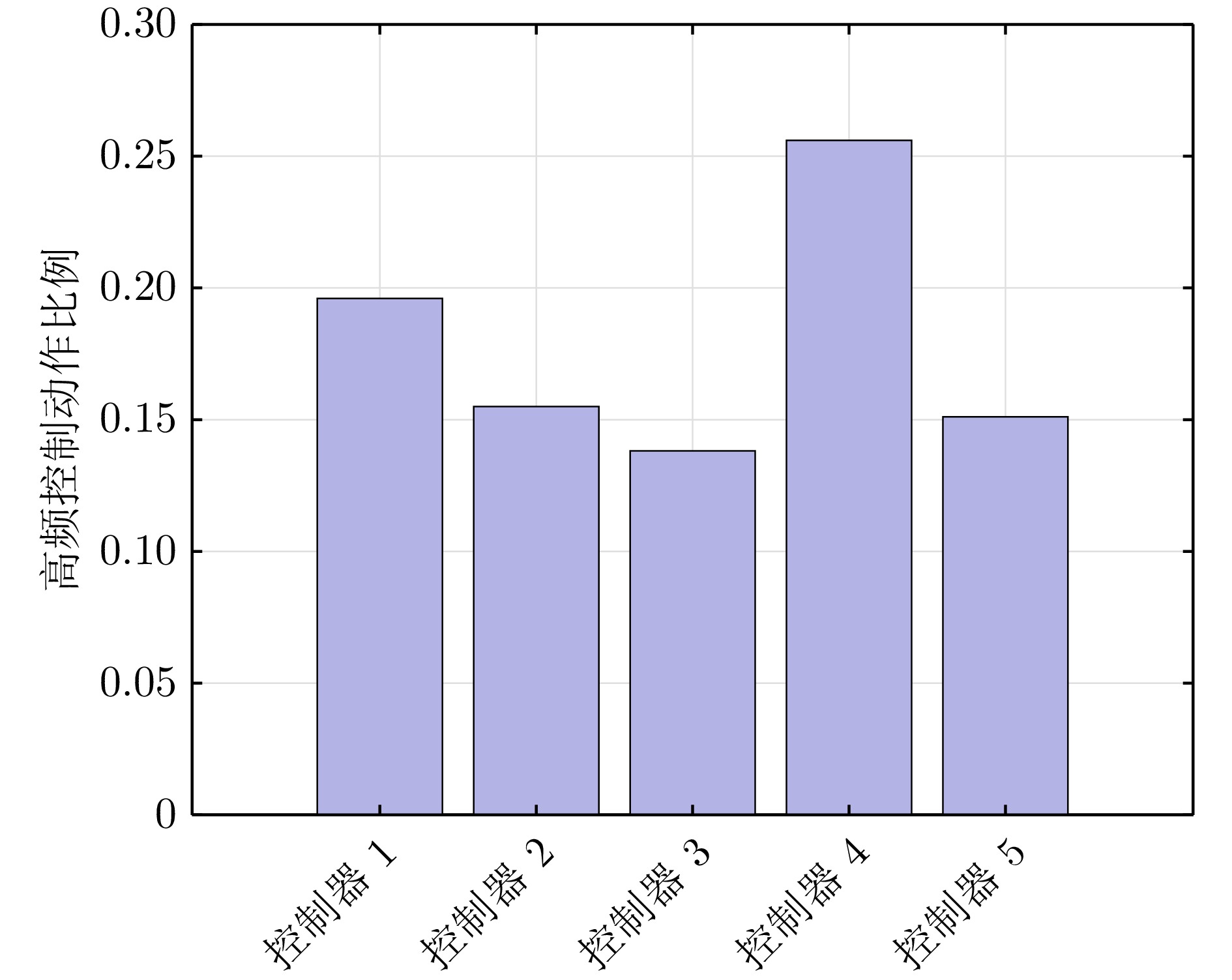
摘要: 针对欠驱动船舶在复杂海况下路径跟踪、横摇稳定与舵机磨损抑制的多目标协同难题, 提出基于稀疏优化的模型预测控制方法. 首先构建融合路径跟踪误差与横摇运动的高保真增广动力学模型, 显式考虑舵角与舵速约束; 再引入时变自适应L1范数惩罚机制, 根据跟踪误差动态调节稀疏化权重, 在保证跟踪精度的同时抑制高频打舵; 最后设计投影近端梯度法, 通过梯度步、近端步与投影步交替迭代, 高效求解多约束复合优化问题, 并证明了算法的线性收敛性与闭环系统的有界稳定性. 仿真结果表明, 与未考虑横摇稳定的方法相比, 所提方法在保持路径跟踪精度的前提下, 横摇角与横摇角速度标准差分别降低52.17%和67.52%; 与基于二次规划的精确解法相比, 高频控制动作比例减少29.49%, 求解耗时降低97.67%, 显著提升了欠驱动船舶的横向稳定性、控制稀疏性与计算实时性, 为复杂海况下的多目标协同控制提供有效参考.Abstract: To address the multi-objective cooperative challenge of path following, roll stabilization, and steering gear wear suppression for underactuated vessels in complex sea conditions, a model predictive control method based on sparse optimization is proposed. First, a high-fidelity augmented dynamic model integrating path following error and roll motion is established, with explicit constraints on rudder angle and rate; A time-varying adaptive L1-norm penalty mechanism is then introduced to dynamically adjust the sparsity weight according to the tracking error, thereby suppressing high-frequency rudder actions while ensuring tracking accuracy; Finally, a projected proximal gradient method is designed to efficiently solve the multi-constraint composite optimization problem via alternating iterations of gradient, proximal, and projection steps. The linear convergence of the algorithm and the bounded stability of the closed-loop system are proved. Simulation results show that, compared with methods neglecting roll stabilization, the proposed approach reduces the standard deviations of roll angle and roll angular velocity by 52.17% and 67.52%, respectively, while maintaining path following accuracy. Compared with the exact solution based on quadratic programming, it reduces the proportion of high-frequency control actions by 29.49% and the solution time by 97.67%, significantly enhancing the lateral stability, control sparsity, and computational real-time performance of underactuated vessels. This provides an effective reference for multi-objective cooperative control in complex sea conditions.
-
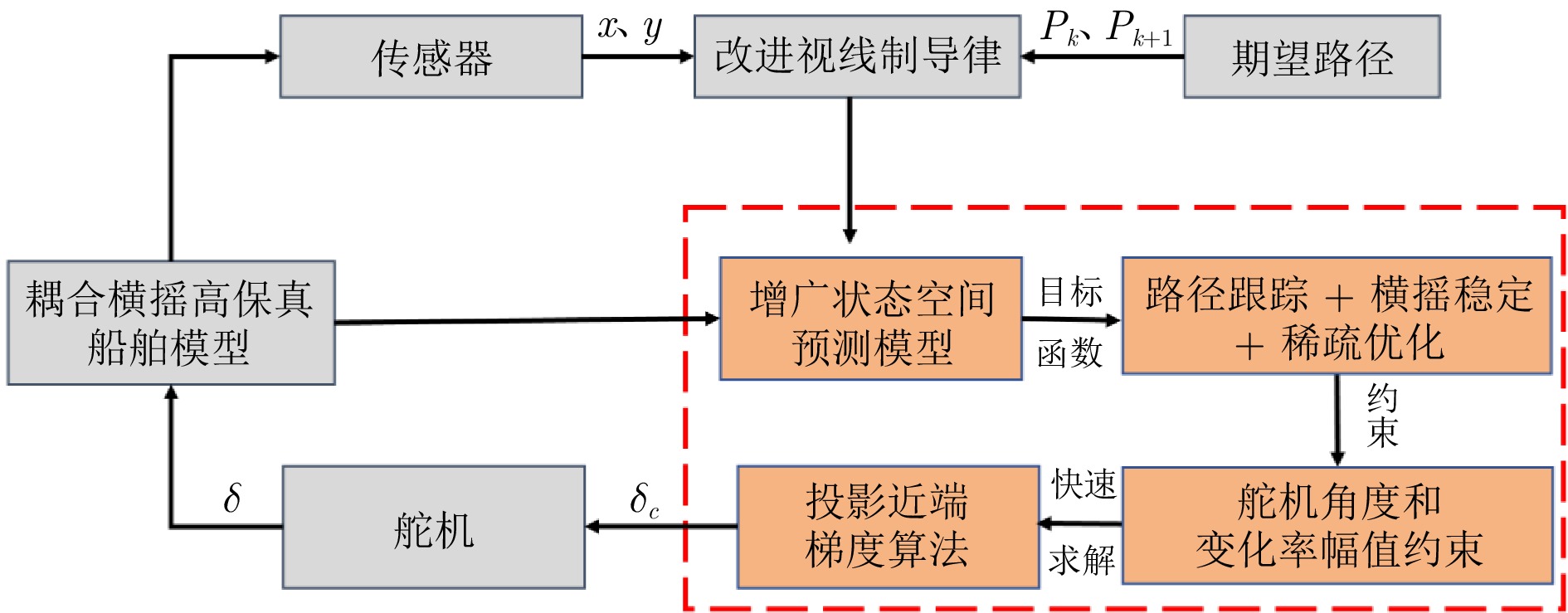
图 2 基于投影近端梯度算法的增广状态模型预测控制框图
Fig. 2 Block diagram of augmented state MPC based on projection proximal gradient algorithm
表 1 参考路径点
Table 1 Reference waypoints
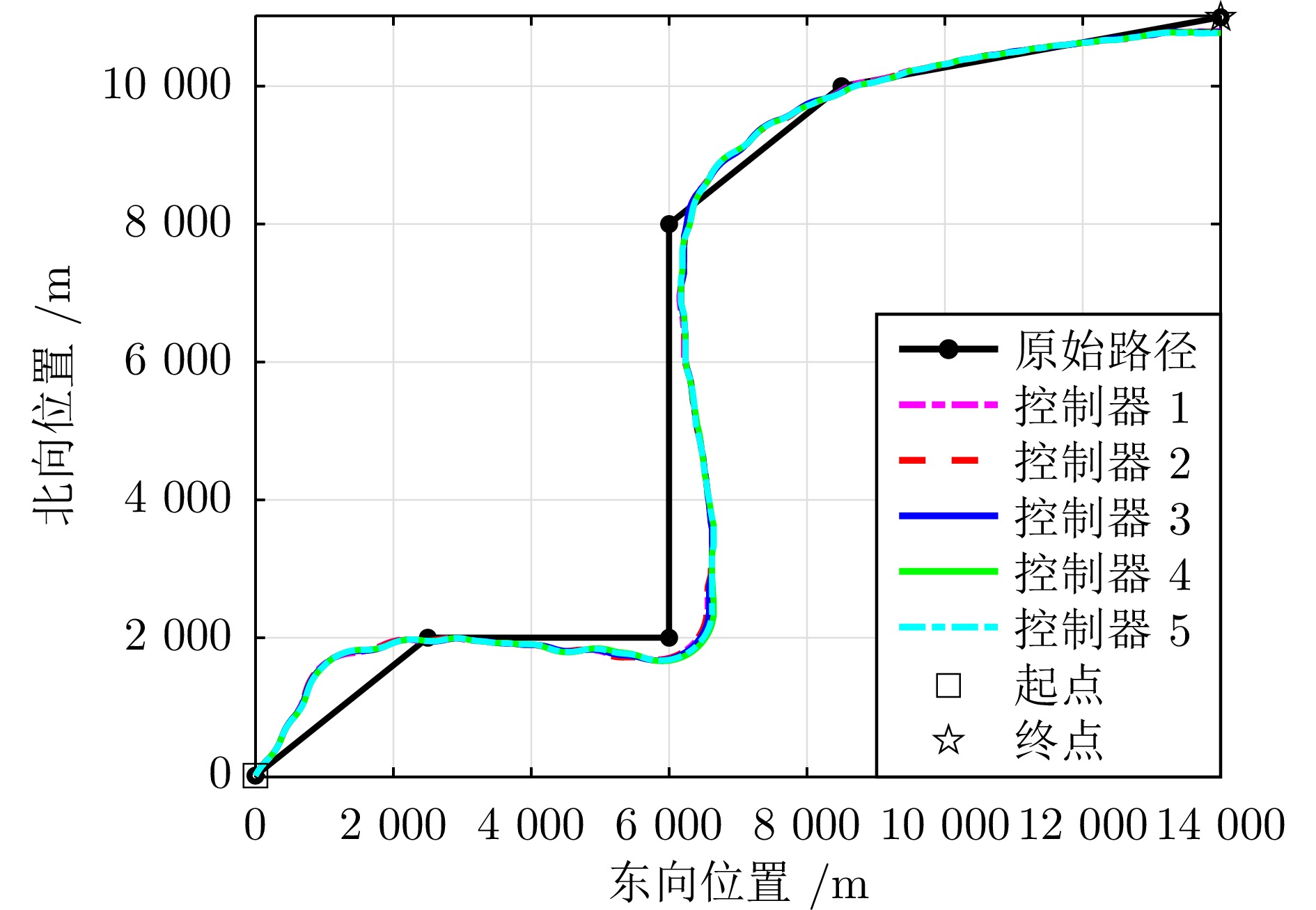
路径点 $ x $ 坐标 $ y $ 坐标 1 0 0 2 2 500 2 000 3 6 000 2 000 4 6 000 8 000 5 8 500 10 000 6 14 000 11 000  下载: 导出CSV
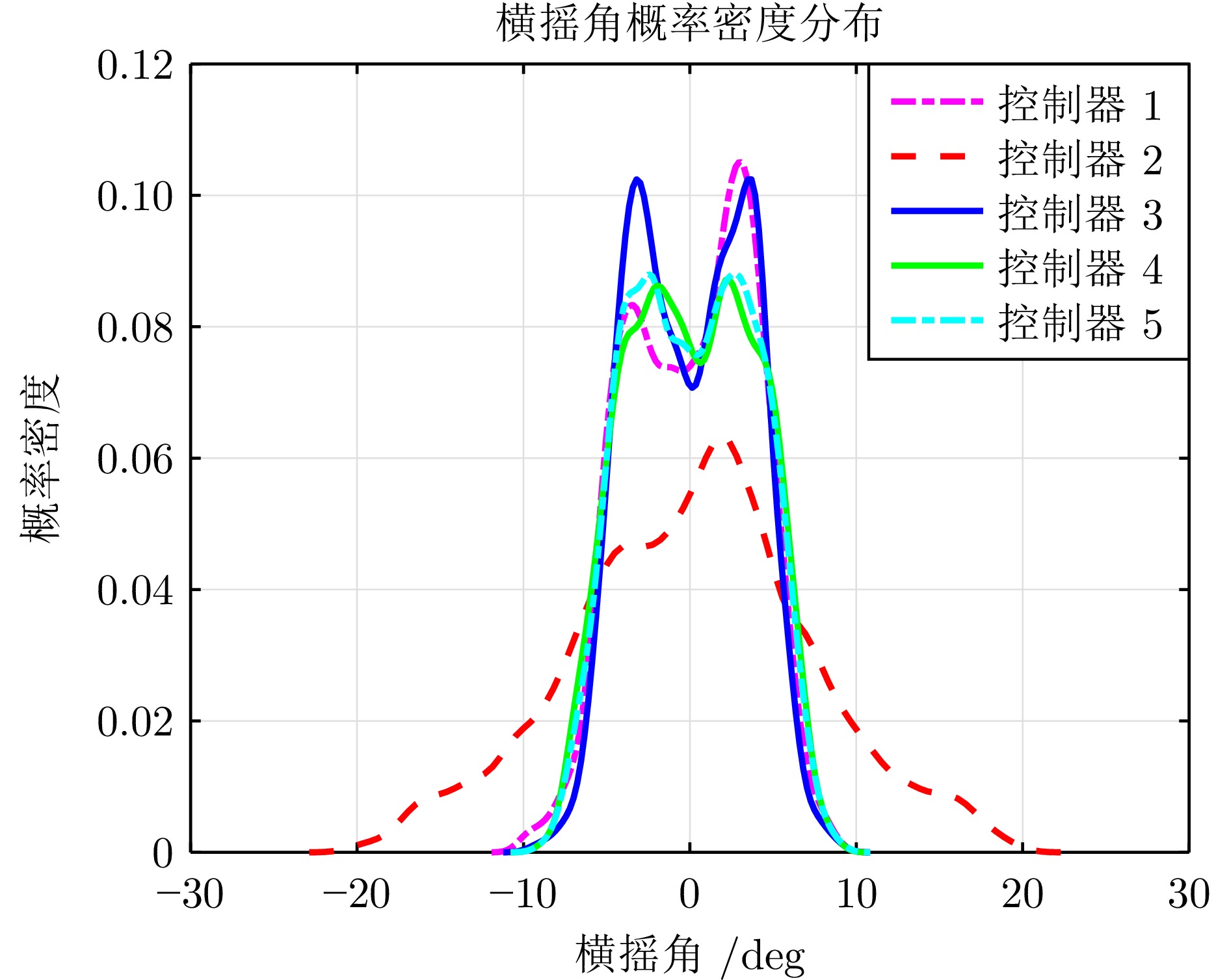
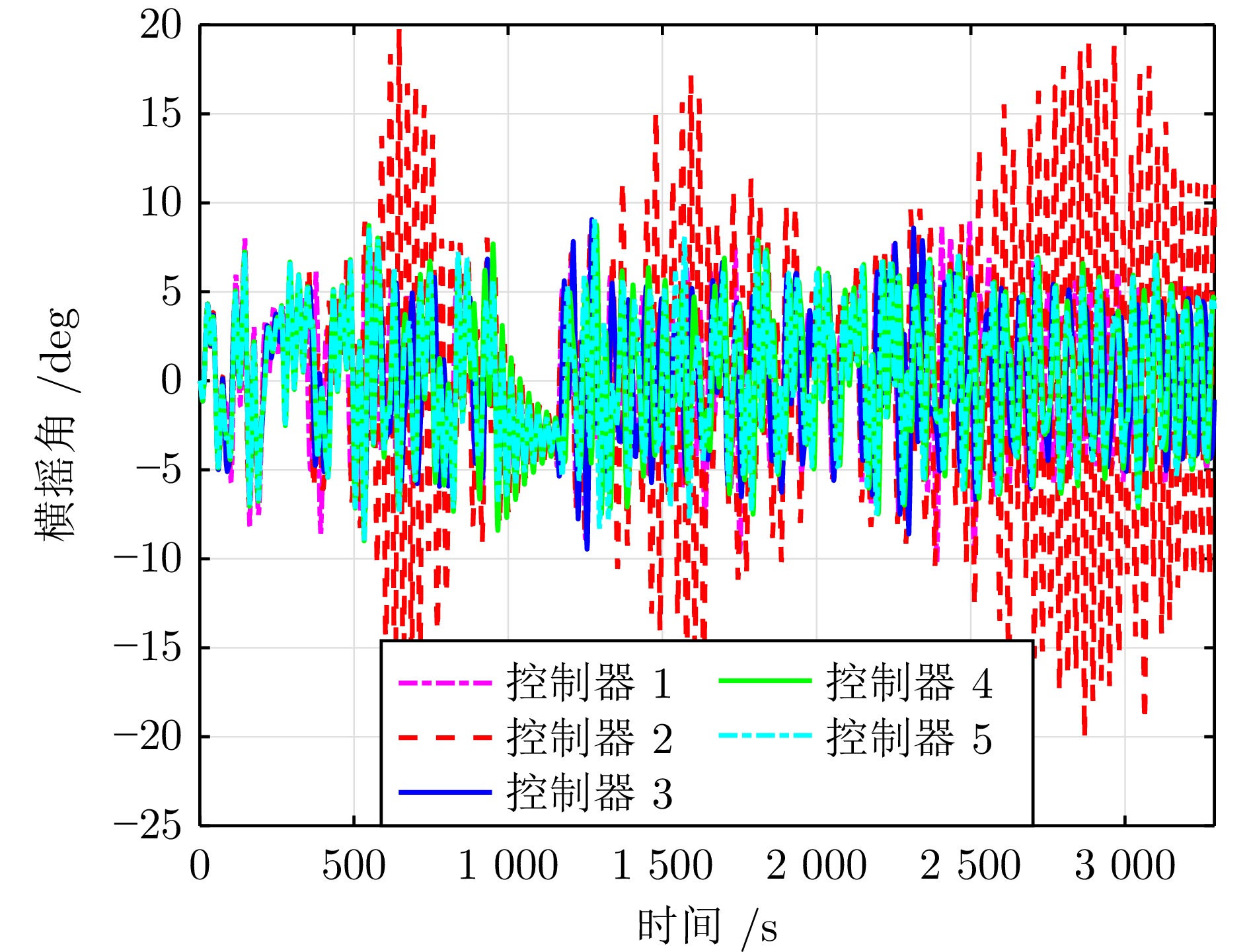
表 2 控制器减摇效果对比
Table 2 Comparison of controller roll reduction effectiveness
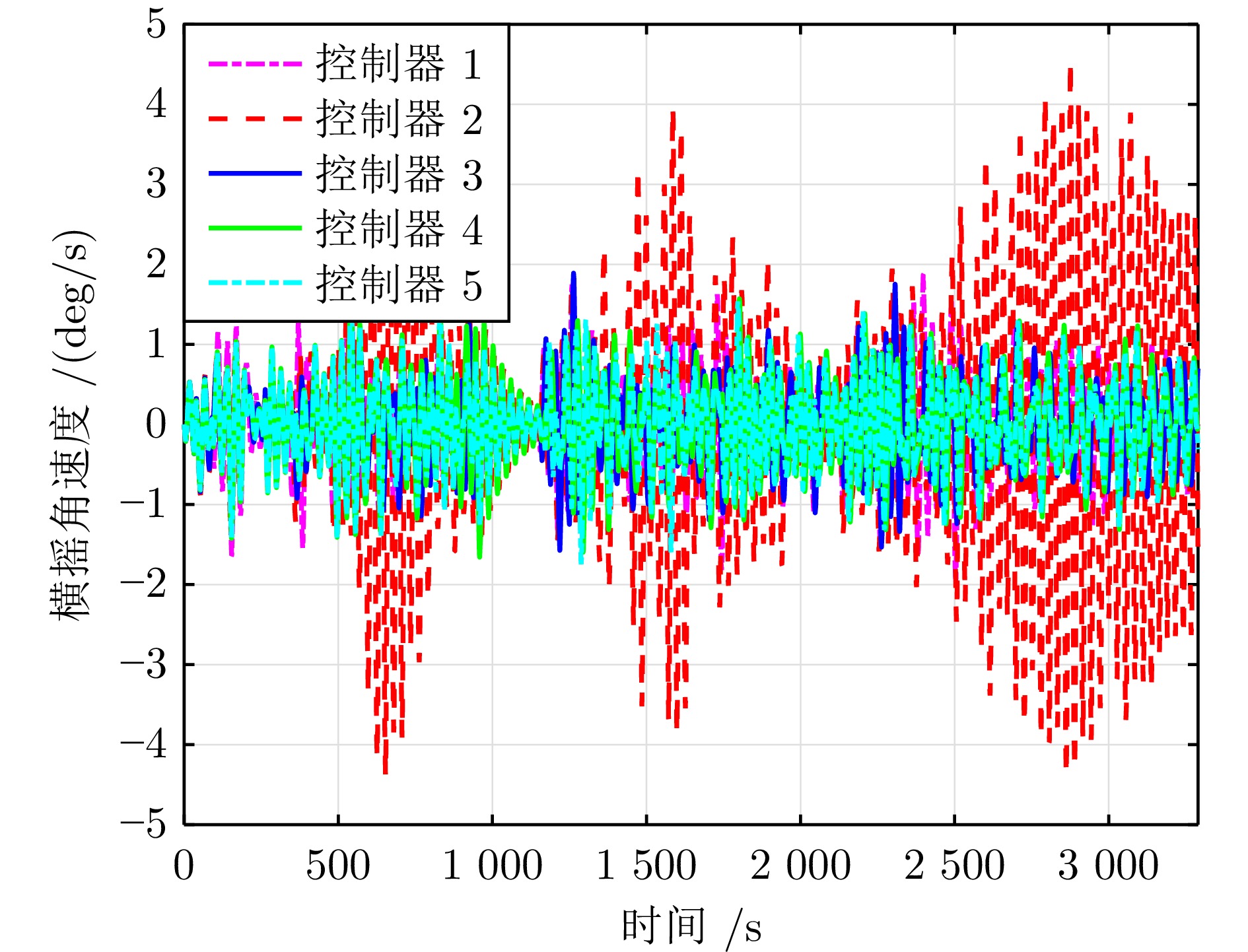
控制器 横摇角SD
(°)横摇角速度SD
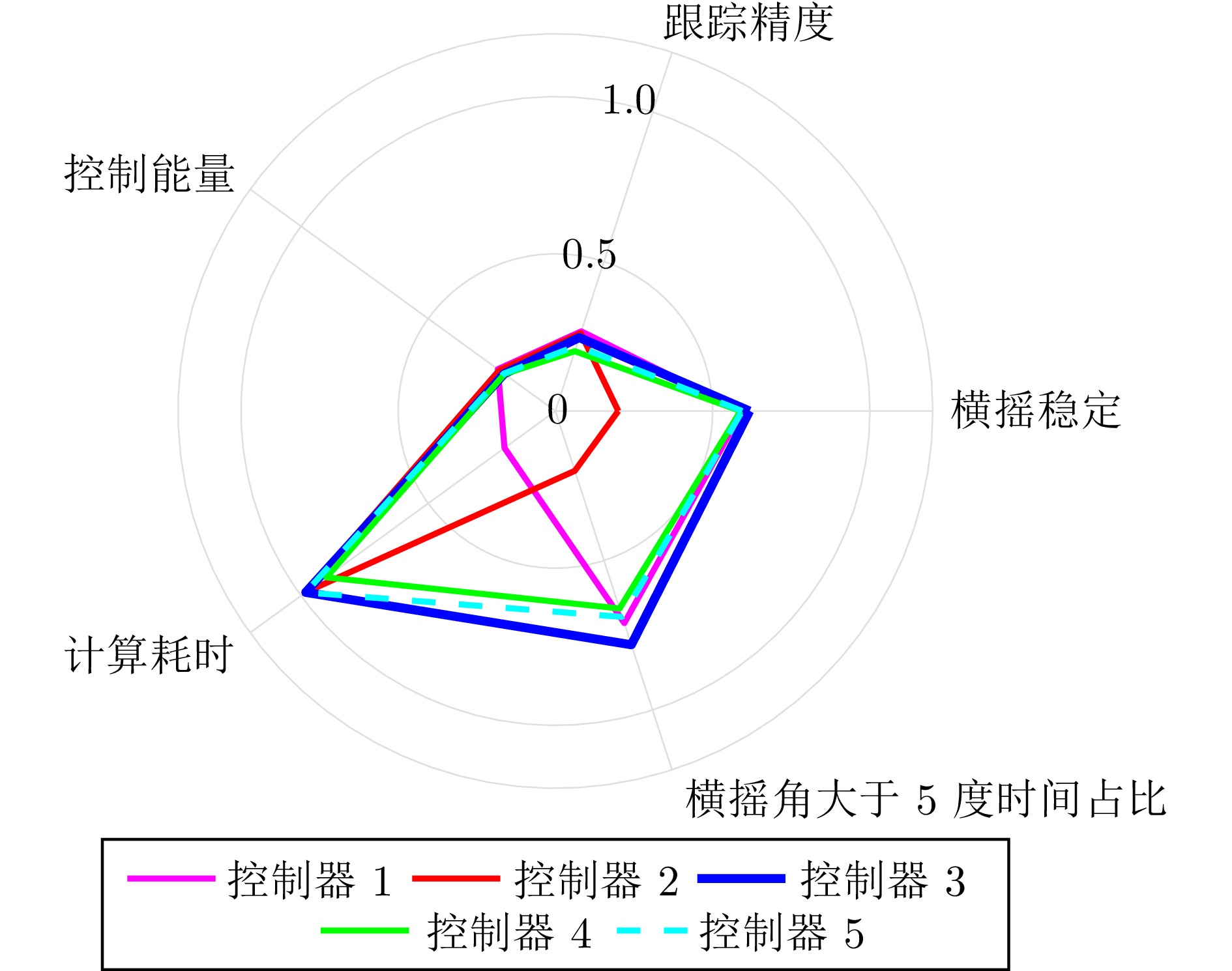
((°)/s)控制器1 (减摇后, QP) 3.684 0.575 控制器2 (减摇前) 7.253 1.555 控制器3 (减摇后) 3.469 0.505 控制器4 (减摇后, PNN) 3.730 0.585 控制器5 (减摇后, 固定稀疏权重) 3.682 0.572 控制器3 vs控制器1 5.84%$ \uparrow $ 12.17%$ \uparrow $ 控制器3 vs控制器2 52.17%$ \uparrow $ 67.52%$ \uparrow $ 控制器3 vs控制器4 7.00%$ \uparrow $ 13.68%$ \uparrow $ 控制器3 vs控制器5 5.79%$ \uparrow $ 11.71%$ \uparrow $
下载: 导出CSV
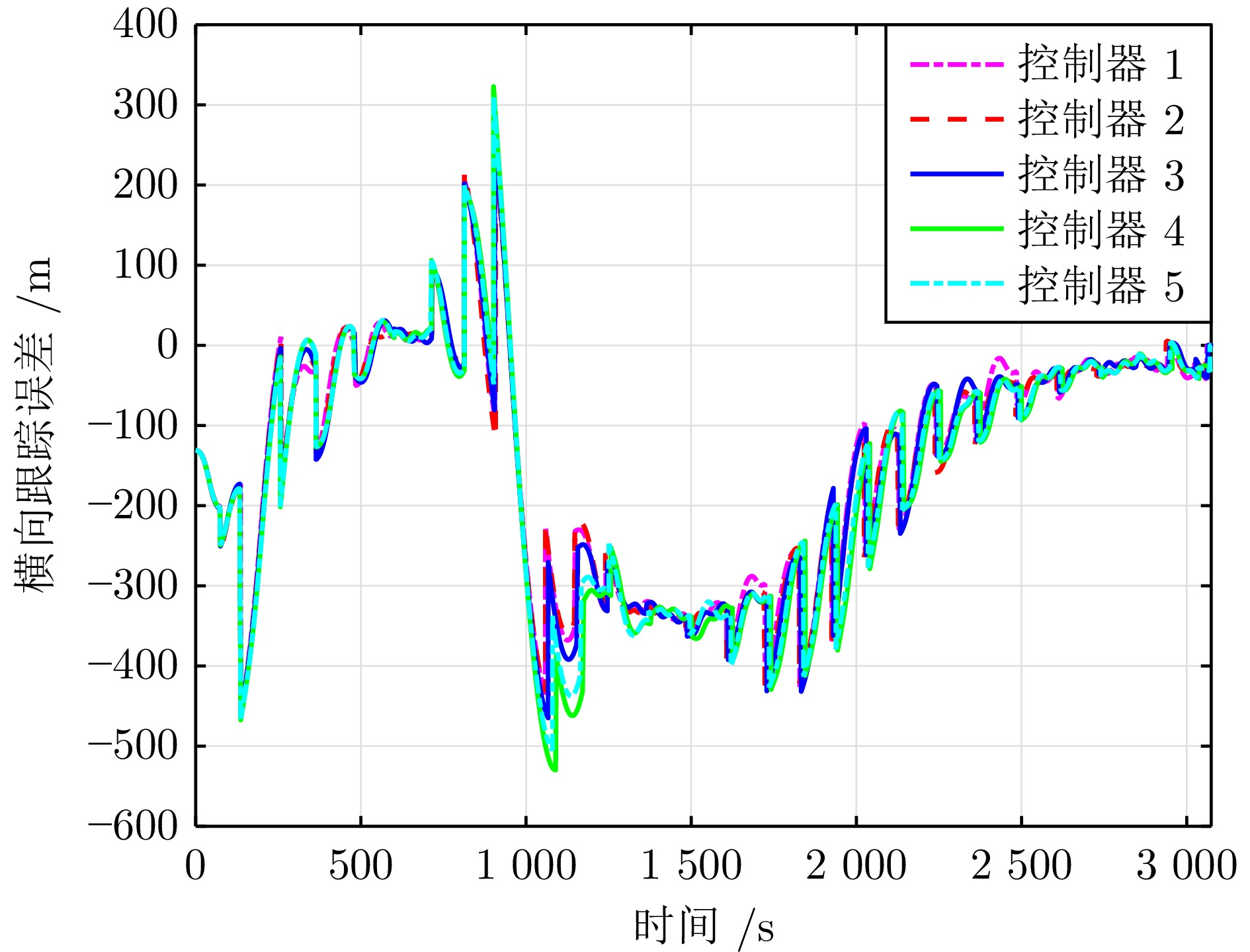
表 3 控制器跟踪误差峰值和横摇角超过5° 时间占比对比
Table 3 Comparison of the controller peak tracking error and the percentage of time with roll angle exceeding 5°
控制器 跟踪误差峰值(m) $ \varphi >5^\circ $时间
占比(%)控制器1 (减摇后, QP) 462.8 16.96 控制器2 (减摇前) 467.3 46.65 控制器3 (减摇后) 464.8 12.73 控制器4 (减摇后, PNN) 529.8 19.80 控制器5 (减摇后, 固定稀疏权重) 504.8 18.16 控制器3 vs控制器1 0.43%$ \downarrow $ 24.94%$ \uparrow $ 控制器3 vs控制器2 0.54%$ \uparrow $ 72.71%$ \uparrow $ 控制器3 vs控制器4 12.27%$ \uparrow $ 35.71%$ \uparrow $ 控制器3 vs控制器5 7.93%$ \uparrow $ 29.90%$ \uparrow $
下载: 导出CSV
表 4 控制器3鲁棒性验证
Table 4 Robustness verification of controller 3
控制器 横摇角SD
(°)横摇角速度SD
((°)/s)控制器3 (本文) 3.469 0.505 控制器3 (本文) + 海浪扰动 5.004 5.122 控制器3 (本文) + (摄动$ +10\% $) 3.997 0.592 控制器3 (本文) + (摄动$ -10\% $) 3.742 0.565
下载: 导出CSV
表 5 控制器稀疏效果和计算耗时
Table 5 Controller sparsity effect and computation time
控制器 稀疏度 计算耗时(s) 控制器1 (减摇后, QP) 0.804 14.59 控制器2 (减摇前) 0.845 0.38 控制器3 (减摇后) 0.862 0.34 控制器4 (减摇后, PNN) 0.744 1.89 控制器5 (减摇后, 固定稀疏权重) 0.848 0.33 控制器3 vs控制器1 7.21%$ \uparrow $ 97.67%$ \uparrow $ 控制器3 vs控制器2 2.01%$ \uparrow $ 10.53%$ \uparrow $ 控制器3 vs控制器4 15.86%$ \uparrow $ 82.01%$ \uparrow $ 控制器3 vs控制器5 1.65%$ \uparrow $ 3.03%$ \downarrow $
下载: 导出CSV
-
[1] 张文拴, 李争, 郑瑶. 国内外无人船发展现状及研发趋势. 舰船科学技术, 2024, 46(15): 79−83 doi: 10.3404/j.issn.1672-7649.2024.15.014Zhang Wen-Shuan, Li Zheng, Zheng Yao. The current status and research and development trend of unmanned ships at home and abroad. Ship Science and Technology, 2024, 46(15): 79−83 doi: 10.3404/j.issn.1672-7649.2024.15.014 [2] Xu W H, Jiao J L, Xu G D, Zhang M, Zou Y T. Intelligent control of flap-type fin stabilizer for ship roll motion reduction. Ocean Engineering, 2025, 323: Article No. 120630 doi: 10.1016/j.oceaneng.2025.120630 [3] Li W, Zhang J, Xu W L. High-speed multihull anti-pitching control based on heave velocity and pitch angular velocity estimation. ISA Transactions, 2024, 146: 380−391 doi: 10.1016/j.isatra.2023.12.039 [4] 张成举, 王聪, 王金强, 李聪慧. 欠驱动水面无人艇鲁棒自适应位置跟踪控制. 兵工学报, 2020, 41(7): 1393−1400 doi: 10.3969/j.issn.1000-1093.2020.07.017Zhang Cheng-Ju, Wang Cong, Wang Jin-Qiang, Li Cong-Hui. Robust adaptive position tracking control for underactuated unmanned surface vessels. Acta Armamentarii, 2020, 41(7): 1393−1400 doi: 10.3969/j.issn.1000-1093.2020.07.017 [5] 章阳, 廉力之. 高性能复合型舰船研究综述. 机电工程技术, 2019, 48(9): 11−14 doi: 10.3969/j.issn.1009-9492.2019.09.004Zhang Yang, Lian Li-Zhi. A review of high-performance composite ships. Mechanical & Electrical Engineering Technology, 2019, 48(9): 11−14 doi: 10.3969/j.issn.1009-9492.2019.09.004 [6] 祝贵兵, 吴晨, 马勇. 虚假数据注入式攻击下无人水面船舶自适应神经输出反馈轨迹跟踪控制. 自动化学报, 2024, 50(7): 1472−1484 doi: 10.16383/j.aas.c220984Zhu Gui-Bin, Wu Chen, Ma Yong. Adaptive neural output feedback trajectory tracking control of unmanned surface vessels under false data injection attacks. Acta Automatica Sinica, 2024, 50(7): 1472−1484 doi: 10.16383/j.aas.c220984 [7] Ning J, Wang Y, Chen C L, Li T. Neural network observer based adaptive trajectory tracking control strategy of unmanned surface vehicle with event-triggered mechanisms and signal quantization. IEEE Transactions on Emerging Topics in Computational Intelligence, 2025, 9(4): 3136−3146 doi: 10.1109/TETCI.2025.3526333 [8] Zhao P, Liang L H, Zhang S T, Ji M, Yuan J. Simulation analysis of rudder roll stabilization during ship turning motion. Ocean Engineering, 2019, 189: Article No. 106332 doi: 10.1016/j.oceaneng.2019.106322 [9] 安文辉. 减摇鳍在智能船舶的应用. 船电技术, 2024, 44(7): 53−56 doi: 10.3969/j.issn.1003-4862.2024.07.014An Wen-Hui. Application of fin stabilizers in intelligent ships. Marine Electric & Electronic Technology, 2024, 44(7): 53−56 doi: 10.3969/j.issn.1003-4862.2024.07.014 [10] 王宁, 贾薇, 吴浩峻. 欠驱动无人船路径跟踪: 一种有限时间正切漂角视线制导方法. 控制与决策, 2025, 40(1): 187−195 doi: 10.13195/j.kzyjc.2024.0336Wang Ning, Jia Wei, Wu Hao-Jun. Path following of underactuated unmanned surface vessels: A finite-time tangent drift angle line-of-sight guidance method. Control and Decision, 2025, 40(1): 187−195 doi: 10.13195/j.kzyjc.2024.0336 [11] 杨朔, 刘伟, 孙健. 基于积分LOS的多无人艇协同路径跟踪. 计算机测量与控制, 2017, 25(9): 75−78 doi: 10.16526/j.cnki.11-4762/tp.2017.09.020Yang Shuo, Liu Wei, Sun Jian. Cooperative path following of multiple unmanned surface vessels based on integral LOS. Computer Measurement & Control, 2017, 25(9): 75−78 doi: 10.16526/j.cnki.11-4762/tp.2017.09.020 [12] 关海滨, 艾矫燕. 全局快速终端滑模控制在欠驱动无人船镇定中的应用研究. 广西大学学报(自然科学版), 2018, 43(6): 2172−2183 doi: 10.13624/j.cnki.issn.1001-7445.2018.2172Guan Hai-Bin, Ai Jiao-Yan. Application of global fast terminal sliding mode control in stabilization of underactuated unmanned surface vessels. Journal of Guangxi University (Natural Science Edition), 2018, 43(6): 2172−2183 doi: 10.13624/j.cnki.issn.1001-7445.2018.2172 [13] Oestreich C E, Linares R, Gondhalekar R. Tube-based model predictive control with uncertainty identification for autonomous spacecraft maneuvers. Journal of Guidance, Control, and Dynamics, 2023, 46(1): 6−20 doi: 10.2514/1.G006438 [14] Zakeri Y, Sheikholeslam F, Haeri M. Identification for control approach to data-driven model predictive control. International Journal of Automation and Control, 2024, 18(3): 281−301 doi: 10.1504/ijaac.2024.10061447 [15] Liang L H, Cheng Q C, Jiang Y L, Cai P F, Zhao Z H. Rudder roll stabilization control method of ship with input constraints. Journal of Marine Engineering & Technology, 2024, 24(5): 405−416 [16] 张广洁, 严卫生, 高剑. 基于模型预测控制的欠驱动AUV直线路径跟踪. 水下无人系统学报, 2017, 25(2): 82−88Zhang Guang-Jie, Yan Wen-Sheng, Gao Jian. Straight-line path following for underactuated AUV based on model predictive control. Journal of Unmanned Undersea Systems, 2017, 25(2): 82−88 [17] Li Z, Sun J, Oh S. Path following for marine surface vessels with rudder and roll constraints: An MPC approach. In: Proceedings of the 2009 American Control Conference. St. Louis, MO, USA: IEEE, 2009. 3611−3616 [18] Huang Z, Zhang J, Xu W, Liu Z. Anti-pitching of high-speed multihull ship based on fast predictive control and iterative learning control. Ocean Engineering, 2025, 337: Article No. 121927 doi: 10.1016/j.oceaneng.2025.121927 [19] Gallieri M. Lasso-MPC——Predictive Control With l1-Regularised Least Squares. [Ph.D. dissertation], University of Cambridge, UK, 2016. [20] 赵嘉, 胡秋敏, 肖人彬, 潘正祥, 崔志华, 樊棠怀. 求解大规模稀疏优化问题的高维多目标萤火虫算法. 控制与决策, 2024, 39(12): 3989−3996 doi: 10.13195/j.kzyjc.2024.0062Zhao Jia, Hu Qiu-Min, Xiao Ren-Bin, Pan Zheng-Xiang, Cui Zhi-Hua, Fan Tang-Huai. High-dimensional multi-objective firefly algorithm for large-scale sparse optimization problems. Control and Decision, 2024, 39(12): 3989−3996 doi: 10.13195/j.kzyjc.2024.0062 [21] Li D, He Y. Incremental echo state network for a water-jet propulsion USV: Theoretical and experimental research. In: Proceedings of the 2016 American Control Conference. Boston, MA, USA: IEEE, 2016. 5296−5301 [22] Liu C, Wang D, Zhang Y, Meng X. Model predictive control for path following and roll stabilization of marine vessels based on neurodynamic optimization. Ocean Engineering, 2020, 217: Article No. 107524 doi: 10.1016/j.oceaneng.2020.107524 [23] Qin Y F, Liu Z Q. FXESO based FNMPC path following control for underactuated surface vessels with roll stabilization. Ocean Engineering, 2023, 280: Article No. 114855 doi: 10.1016/j.oceaneng.2023.114855 [24] 王全胜, 刘志全, 高妍南. 基于RMPC和横摇约束的欠驱动船路径跟踪控制. 控制与决策, 2025, 40(4): 1303−1311 doi: 10.13195/j.kzyjc.2024.0408Wang Quan-Sheng, Liu Zhi-Quan, Gao Yan-Nan. Path following control for underactuated ships based on RMPC and roll constraints. Control and Decision, 2025, 40(4): 1303−1311 doi: 10.13195/j.kzyjc.2024.0408 [25] Fossen T I. Handbook of Marine Craft Hydrodynamics and Motion Control. Chichester: John Wiley & Sons, 2011. [26] Li Z. Path Following With Roll Constraints for Marine Surface Vessels in Wave Fields. [Ph.D. dissertation], University of Michigan, USA, 2009. [27] Amerongen J V. Adaptive Steering of Ships——A Model Reference Approach to Improved Manoeuvring and Economic Course Keeping. [Ph.D. dissertation], Delft University of Technology, The Netherlands, 1982. [28] Hafner S, Myschik S, Holzapfel F. Accelerating sequential least squares active set control allocation. Control Engineering Practice, 2026, 166: Article No. 106621 doi: 10.1016/j.conengprac.2025.106621 [29] Dhara A, Dutta J. Optimality Conditions in Convex Optimization: A Finite-dimensional View, Boca Raton: CRC Press, 2011. [30] 胡绍涛, 王元恒, 谢忠兵. 2-一致凸和一致光滑Banach空间上关于变分不等式问题的混合外梯度算法. 中国科学: 数学, 2025, 56: 1−16Hu Shao-Tao, Wang Yuan-Heng, Xie Zhong-Bing. Hybrid extragradient algorithm for variational inequality problems in 2-uniformly convex and uniformly smooth banach spaces. Scientia Sinica Mathematica, 2025, 56: 1−16 [31] Mayne D Q, Rawlings J B, Rao C V, Scokaert P O M. Constrained model predictive control: Stability and optimality. Automatica, 2000, 36: 789−814 doi: 10.1016/S0005-1098(99)00214-9 [32] Limon D, Alamo T, Raimondo D M, de la Peña D M, Bravo J M, Ferramosca A, et al. Input-to-state stability: A unifying framework for robust model predictive control. In: Proceedings of the Nonlinear Model Predictive Control, Lecture Notes in Control and Information Sciences, Berlin, Germany: Springer, 2009. 1−26 [33] 刘东, 武裕鑫, 孙树政. 基于不同海浪谱船舶极限海况运动统计特征值预报分析. 舰船科学技术, 2024, 46(9): 60−65 doi: 10.3404/j.issn.1672-7649.2024.09.010Liu Dong, Wu Yu-Xin, Sun Shu-Zheng. Prediction analysis of statistical eigenvalues of ship motion based on different wave spectra under rough sea conditions. Ship Science and Technology, 2024, 46(9): 60−65 doi: 10.3404/j.issn.1672-7649.2024.09.010 -

 下载:
下载:

计量
- 文章访问数: 50
- HTML全文浏览量: 54
- 被引次数: 0
