


Prediction Model of Dissolved Oxygen Concentration in Electronic Waste Treatment Disjunction Process
-
摘要: 电子固废处理析取过程涉及多变量强耦合的多相反应, 其原料异质性使工艺变量间呈现动态因果特性, 导致表征反应平衡的溶解氧浓度难以准确预测. 为解决该问题, 设计一种电子固废处理析取过程溶解氧浓度自适应因果推理预测模型. 首先, 提出一种基于多头注意力的自适应因果发现方法, 更新工艺变量的因果注意力分布, 实现动态因果结构的建模. 其次, 设计一种基于动态掩码的因果干预策略, 抑制工艺参数的虚假因果相关, 实现模型真实因果关系重构. 最后, 构建一种基于元更新的门控网络结构, 调节时空特征与因果特征的门控融合权重, 实现析取过程溶解氧浓度的稳定预测. 在电子固废处理析取过程数据集上验证该预测模型, 实验结果表明, 该模型能够准确描述工艺变量间动态因果关系, 提升溶解氧浓度的预测精度.Abstract: The electronic waste treatment disjunction process involves multiphase reactions with multivariable strong coupling. The heterogeneity of raw materials results in dynamic causal characteristics in process variables, complicating the accurate prediction of dissolved oxygen concentration at reaction equilibrium. To address the issue, an adaptive causal inference prediction model is designed for the dissolved oxygen concentration in electronic waste treatment disjunction process. First, an adaptive causal discovery method based on multi-head attention is proposed, which updates the causal attention distribution among process variables to model dynamic causal structure. Second, a causal intervention strategy based on the dynamic mask is established to suppress spurious causal correlations among process parameters, enabling the reconstruction of true causal relationships in the model. Finally, a gating network structure based on meta-update is constructed to adjust the gating fusion weights of spatiotemporal and causal features, achieving stable prediction of dissolved oxygen concentration in the disjunction process. The proposed prediction model is validated on the electronic waste treatment disjunction process dataset. Experimental results demonstrated that the model can accurately characterize dynamic causal relationships among process variables and improve the prediction accuracy of dissolved oxygen concentration.
-
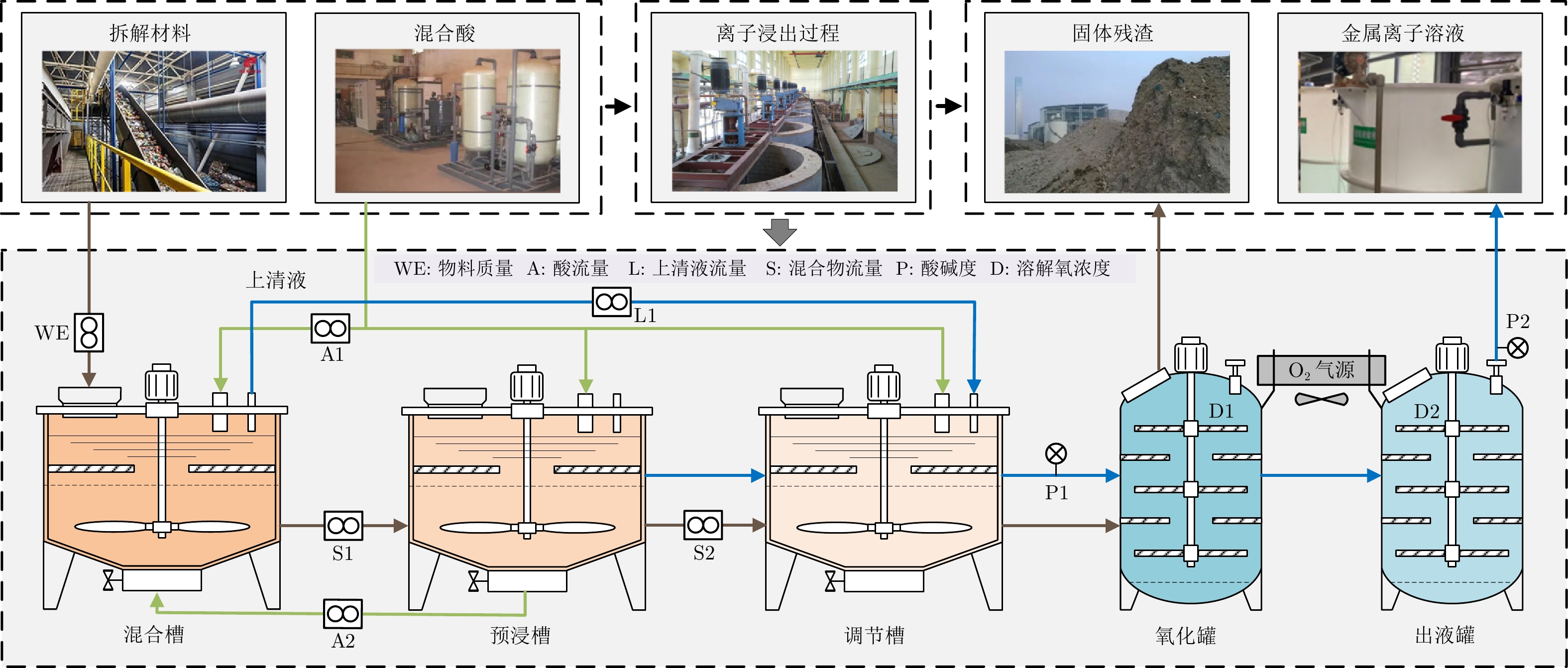
图 1 电子固废处理析取过程示意图
Fig. 1 Schematic diagram of electronic waste treatment disjunction process
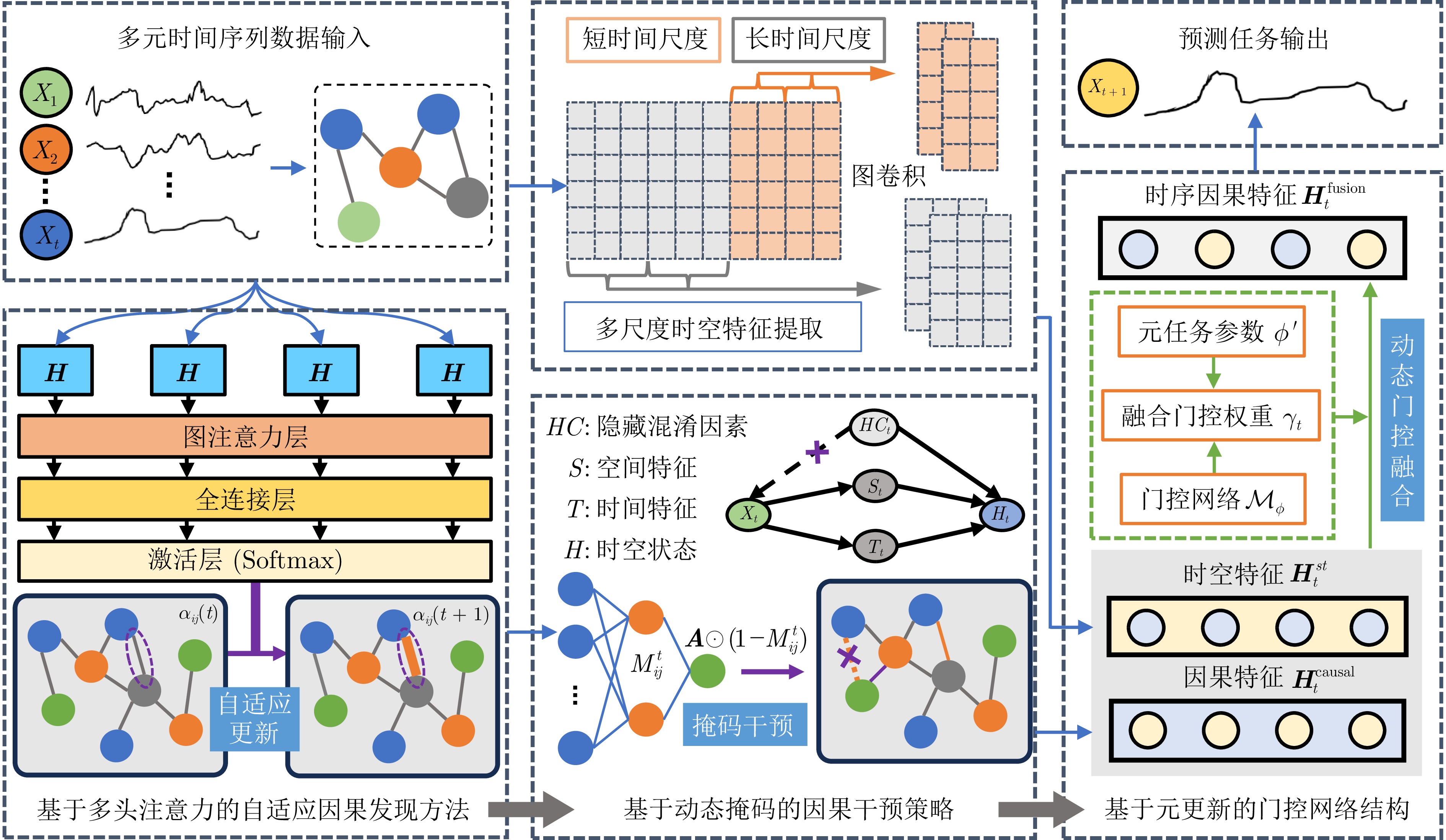
图 2 自适应因果推理预测模型总体框架
Fig. 2 The overall framework of the adaptive causal inference prediction model
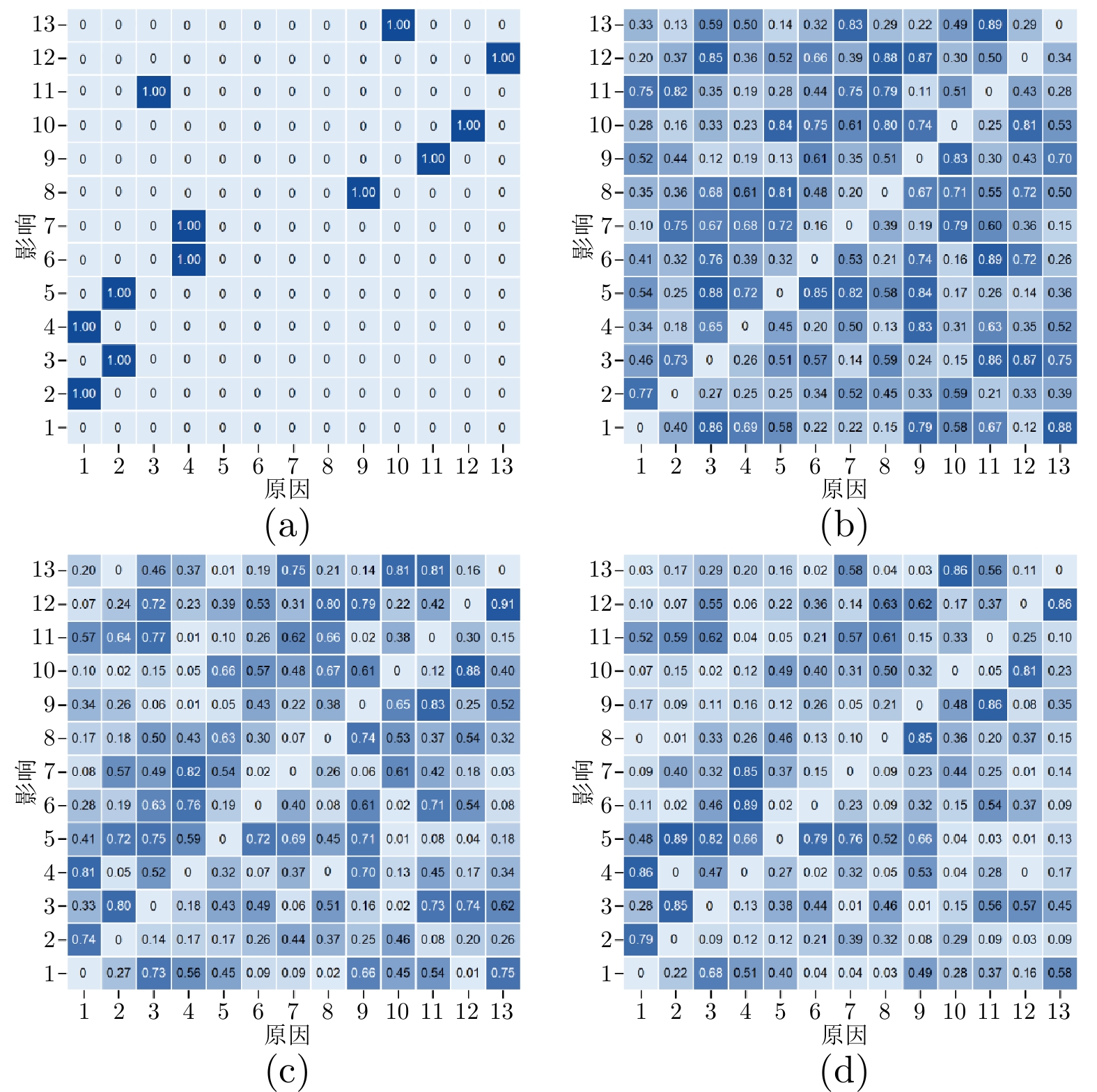
图 3 ZL数据集的因果关系热力图((a)真实因果关系; (b) CISTGNN; (c)未因果干预ACIPM; (d) ACIPM)
Fig. 3 Causal relationship heatmaps on the ZL dataset ((a) Truth causal relationship; (b) CISTGNN; (c) ACIPM without causal intervention; (d) ACIPM)
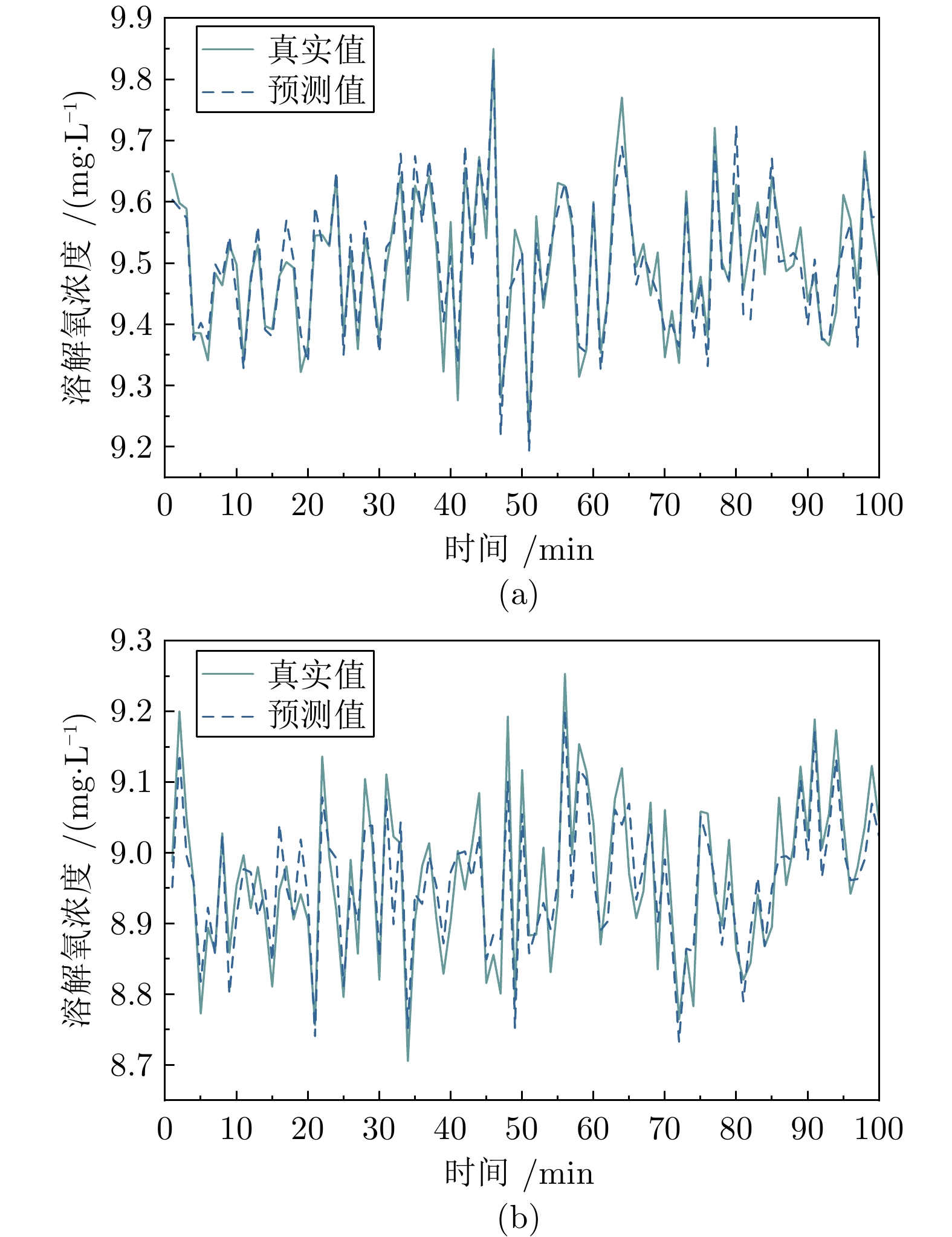
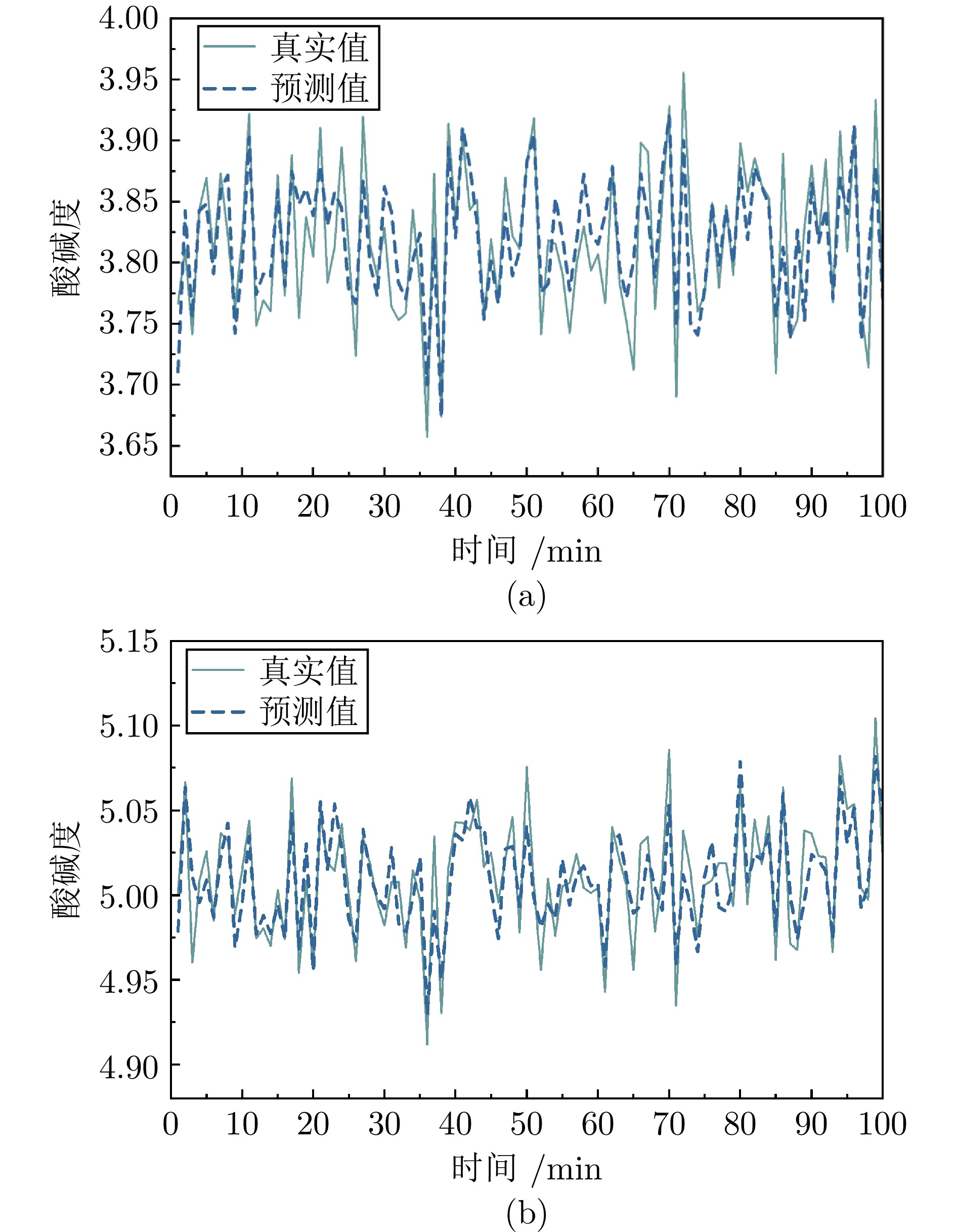
图 5 溶解氧浓度预测曲线((a) D1; (b) D2)
Fig. 5 Prediction curve of dissolved oxygen concentration ((a) D1; (b) D2)
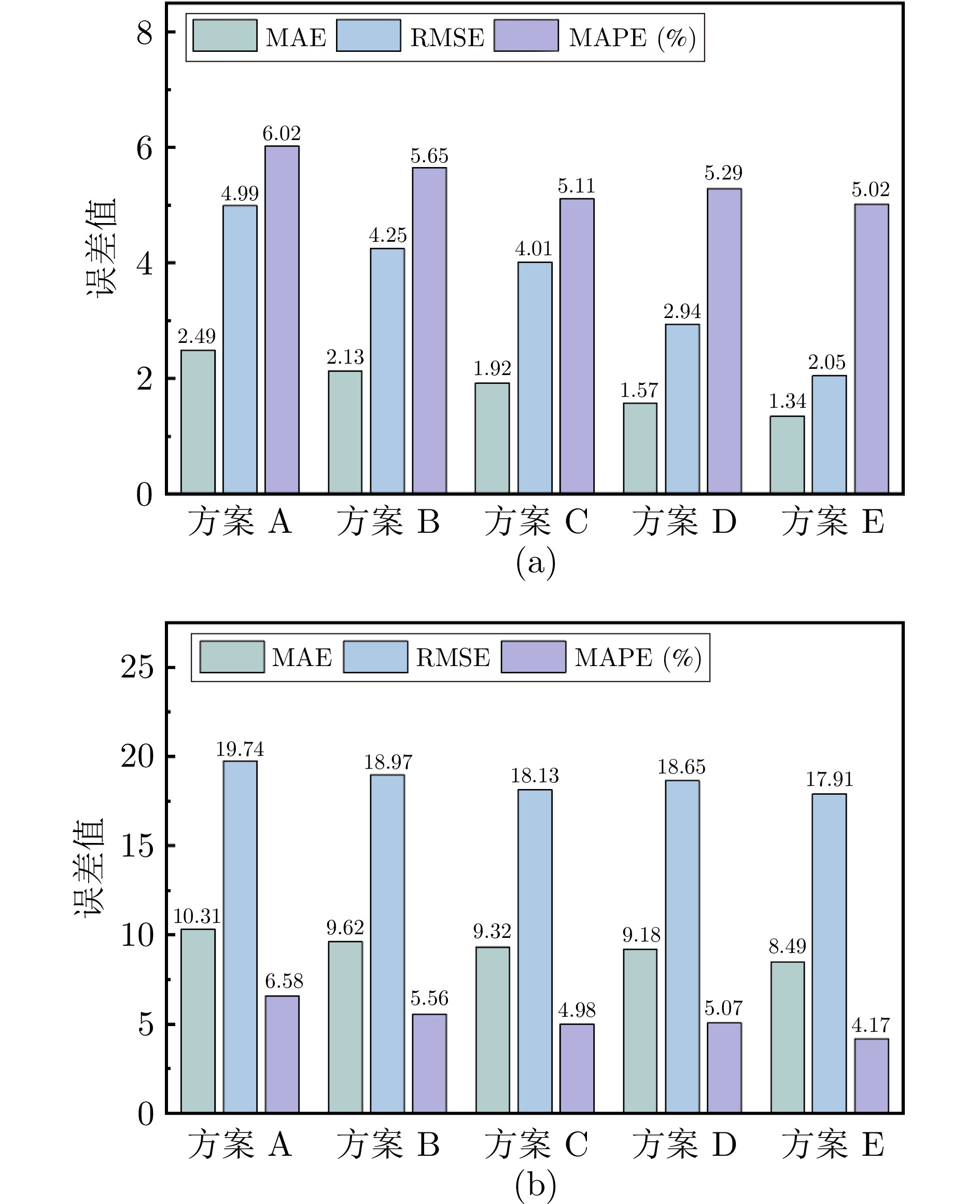
图 6 消融实验结果((a) ZL数据集; (b) TE数据集)
Fig. 6 Ablation experiment results ((a) ZL dataset; (b) TE dataset)
表 1 TE数据集上的对比实验
Table 1 Comparison experiments on the TE dataset
MAE RMSE MAPE (%) DCRNN 10.75 19.55 6.31 STGCN 10.14 23.42 5.48 ASTGCN 9.15 18.21 4.97 CISTGNN 9.60 19.79 5.01 ACIPM 8.49 17.91 4.17  下载: 导出CSV
表 2 ZL数据集上的类GLCM特征
Table 2 GLCM-like features on the ZL dataset
CISTGNN 无CIDM ACIPM 正样本灰度均值$\uparrow$ 0.50 0.77 0.79 负样本灰度均值$\downarrow$ 0.43 0.30 0.21 正样本能量$\uparrow$ 0.24 0.42 0.49 负样本能量$\uparrow$ 0.14 0.18 0.25 正样本熵$\downarrow$ 2.19 1.55 1.42 负样本熵$\downarrow$ 2.89 2.62 2.33 Bhattacharyya$\uparrow$ 0.21 0.86 1.07 注: 无CIDM是未因果干预的ACIPM.
下载: 导出CSV
表 3 ZL数据集上的对比实验
Table 3 Comparison experiments on the ZL dataset
MAE RMSE MAPE (%) DCRNN 2.75 4.32 5.41 STGCN 2.84 4.17 5.47 ASTGCN 1.93 3.19 5.81 CISTGNN 1.63 3.40 5.32 ACIPM 1.34 2.05 5.02
下载: 导出CSV
表 4 消融实验说明
Table 4 Ablation experiment description
方案 ACDM CIDM GNSM A $\times$ $\times$ $\times$ B $\times$ $\times$ $\checkmark$ C $\checkmark$ $\times$ $\checkmark$ D $\checkmark$ $\checkmark$ $\times$ E $\checkmark$ $\checkmark$ $\checkmark$
下载: 导出CSV
-
[1] Foo G, Kara S, Pagnucco M. Artificial learning for part identification in robotic disassembly through automatic rule generation in an ontology. IEEE Transactions on Automation Science and Engineering, 2023, 20(1): 296−309 doi: 10.1109/TASE.2022.3149242 [2] Han H G, Liu Y M, Li F Y, Du Y P. Sparse convolutional model with semantic expression for waste electrical appliances recognition. Science China Technological Sciences, 2024, 67(9): 2881−2893 doi: 10.1007/s11431-023-2650-x [3] Han H G, Zhang Q Y, Li F Y, Du Y P, Gu Y F, Wu Y F. Metallic product recognition with dual attention and multi-branch residual blocks-based convolutional neural networks. Circular Economy, 2022, 1: Article No. 100014 doi: 10.1016/j.cec.2022.100014 [4] 曹力丰, 阎高伟, 肖舒怡, 董珍柱, 董平. 基于域适应物理信息神经网络的时间序列预测方法. 自动化学报, 2025, 51(6): 1329−1346Cao Li-Feng, Yan Gao-Wei, Xiao Shu-Yi, Dong Zhen-Zhu, Dong Ping. Time series prediction method based on domain adaptation physics-informed neural network. Acta Automatica Sinica, 2025, 51(6): 1329−1346 [5] Zhu S Y, Zheng J W, Ma Q L. MR-Transformer: Multiresolution Transformer for multivariate time series prediction. IEEE Transactions on Neural Networks and Learning Systems, 2025, 36(1): 1171−1183 doi: 10.1109/TNNLS.2023.3327416 [6] Duan C M, Wu Z C, Zhu L, Xu X R, Zhu J M, Wei Z Q, et al. DSTN: Dynamic spatio-temporal network for early fault warning in chemical processes. Knowledge-Based Systems, 2024, 296: Article No. 111892 doi: 10.1016/j.knosys.2024.111892 [7] Han H G, Sun C X, Wu X L, Yang H Y, Zhao D Z. Self-organizing stacked type-2 fuzzy neural network with rule generation. IEEE Transactions on Neural Networks and Learning Systems, 2025, 36(6): 10128−10142 doi: 10.1109/TNNLS.2025.3544495 [8] He Z H, Xu L Y, Yu J, Wu X R. Dynamic multi-fusion spatio-temporal graph neural network for multivariate time series forecasting. Expert Systems With Applications, 2024, 241: Article No. 122729 doi: 10.1016/j.eswa.2023.122729 [9] Fang H, Wang H S, Gao Y, Zhang Y G, Bu J J, Han B, et al. InsGNN: Interpretable spatio-temporal graph neural networks via information bottleneck. Information Fusion, 2025, 119: Article No. 102997 doi: 10.1016/j.inffus.2025.102997 [10] Qi X Y, Hu W J, Li B S, Han K. STGNN-FAM: A traffic flow prediction model for spatiotemporal graph networks based on fusion of attention mechanisms. Journal of Advanced Transportation, 2023, 2023(1): Article No. 8880530 [11] Xu Y, Zhang C, Luo Y, Ke W, Zhu Q X, He Y L. Multiattention spatiotemporal fusion graph neural network for chemical process fault diagnosis. IEEE Transactions on Instrumentation and Measurement, 2025, 74: Article No. 3530113 [12] Yu B, Yin H T, Zhu Z X. Spatio-temporal graph convolutional networks: A deep learning framework for traffic forecasting. In: Proceedings of the 27th International Joint Conference on Artificial Intelligence. Stockholm, Sweden: IJCAI, 2018. 3634−3640 [13] Qian L P, Zuo Q, Liu H G, Zhu H. Multivariate time series classification based on spatial-temporal attention-dynamic graph neural network. Applied Intelligence, 2025, 55(2): 1−15 doi: 10.1007/s10489-024-06014-8 [14] Qu Y H, Jia X L, Guo J H, Zhu H R, Wu W B. MSSTGNN: Multi-scaled spatio-temporal graph neural networks for short- and long-term traffic prediction. Knowledge-Based Systems, 2024, 306: Article No. 112716 doi: 10.1016/j.knosys.2024.112716 [15] Sun H Z, Tang X H, Lu J G, Liu F J. Spatio-temporal graph neural network for traffic prediction based on adaptive neighborhood selection. Transportation Research Record, 2024, 2678(6): 641−655 [16] Zheng Y, Koh H Y, Jin M, Chi L H, Phan K T, Pan S R. Correlation-aware spatial-temporal graph learning for multivariate time-series anomaly detection. IEEE Transactions on Neural Networks and Learning Systems, 2023, 35(9): 11802−11816 doi: 10.1109/tnnls.2023.3325667/mm1 [17] Li Z L, Yu J, Zhang G W, Xu L Y. Dynamic spatio-temporal graph network with adaptive propagation mechanism for multivariate time series forecasting. Expert Systems With Applications, 2023, 216: Article No. 119374 doi: 10.1016/j.eswa.2022.119374 [18] Nauta M, Bucur D, Seifert C. Causal discovery with attention based convolutional neural networks. Machine Learning and Knowledge Extraction, 2019, 1(1): 312−340 doi: 10.3390/make1010019 [19] Zhu Q H, Chen S W, Guo T, Lv Y S, Du W B. A spatio-temporal approach with self-corrective causal inference for flight delay prediction. IEEE Transactions on Intelligent Transportation Systems, 2024, 25(12): 20820−20831 doi: 10.1109/TITS.2024.3443261 [20] Miraki A, Parvinian P, Arghandeh R. Electricity demand forecasting at distribution and household levels using explainable causal graph neural network. Energy and AI, 2024, 16: Article No. 100368 doi: 10.1016/j.egyai.2024.100368 [21] Wang H, Liu R N, Ding S X, Hu Q H, Li Z X, Zhou H K. Causal-trivial attention graph neural network for fault diagnosis of complex industrial processes. IEEE Transactions on Industrial Informatics, 2024, 20(2): 1987−1996 doi: 10.1109/TII.2023.3282979 [22] Luo X X, Yin W, Li Z. Spatio-temporal graph neural network with hidden confounders for causal forecast. In: Proceedings of the 32nd International Conference on Case-Based Reasoning. Yucatán, Mexico: Springer, 2024. 157−169 [23] Song P Y, Zhao C H, Huang B. Addressing heterogeneous time-frequency causality: Source consistency exploring for industrial root cause alignment and diagnosis. IEEE Transactions on Cybernetics, 2025, 55(3): 1107−1120 doi: 10.1109/TCYB.2024.3515174 [24] Song P Y, Zhao C H, Huang B. MPGE and rootrank: A sufficient root-cause characterization and quantification framework for industrial process faults. Neural Networks, 2023, 161: 397−417 doi: 10.1016/j.neunet.2023.01.030 [25] Li Y G, Yu R, Shahabi C, Liu Y. Diffusion convolutional recurrent neural network: Data-driven traffic forecasting. In: Proceedings of the 6th International Conference on Learning Representations. Vancouver, Canada: ICLR, 2018. 52−57 [26] Guo S N, Lin Y F, Feng N, Song C, Wan H Y. Attention based spatial-temporal graph convolutional networks for traffic flow forecasting. In: Proceedings of the AAAI Conference on Artificial Intelligence. Hawaii, USA: AAAI, 2019. 922−929 [27] Portes L, Pirot G, Nzikou M M, Giraud J, Lindsay M, Jessell M, et al. Feature-fusion enhanced t-SNE image atlas for geophysical features discovery. Scientific Reports, 2025, 15(1): Article No. 17152 doi: 10.1038/s41598-025-01333-3 [28] Li J C, Fan Y, Wang Z Y, Wang Y J. A graph neural network with dual-stage feature aggregation for industrial soft sensors. IEEE Transactions on Instrumentation and Measurement, 2025, 7: Article No. 3557410 doi: 10.1109/tim.2025.3606039 [29] Zheng J L, Saxena D, Cao J N. COIN-GNN: Inductive spatial-temporal prediction for continuous distribution shifts via graph neural networks. IEEE Transactions on Knowledge and Data Engineering, 2025, 37(11): 6320−6333 doi: 10.1109/TKDE.2025.3606629 [30] Wang Y L, Wang X L, Zhou J Y, Yang C H, Yang Y. Long sequence multivariate time-series forecasting for industrial processes using SASGNN. IEEE Transactions on Industrial Informatics, 2024, 20(10): 12407−12417 doi: 10.1109/TII.2024.3424214 -

 下载:
下载:

计量
- 文章访问数: 118
- HTML全文浏览量: 69
- PDF下载量: 11
- 被引次数: 0
