


Anode Effect Trend Prediction of Aluminum Electrolysis Cells Based on Multi-channel Spatiotemporal Convolutional Attention Network
-
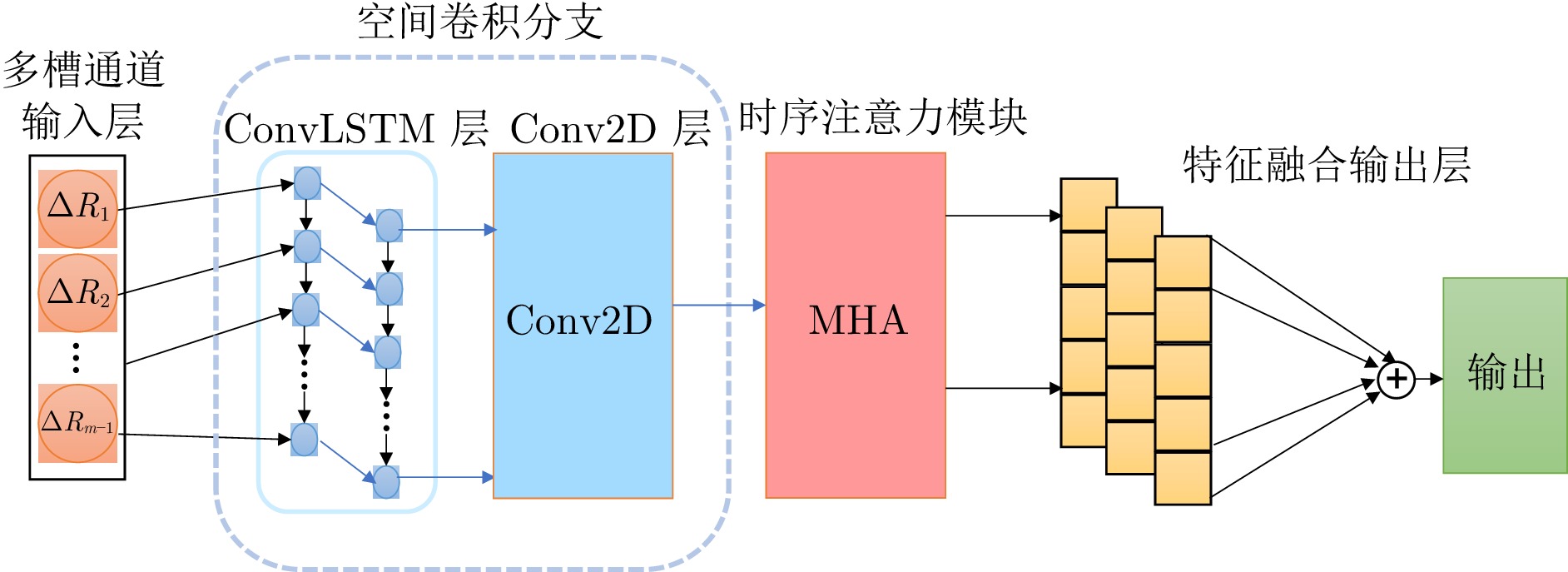
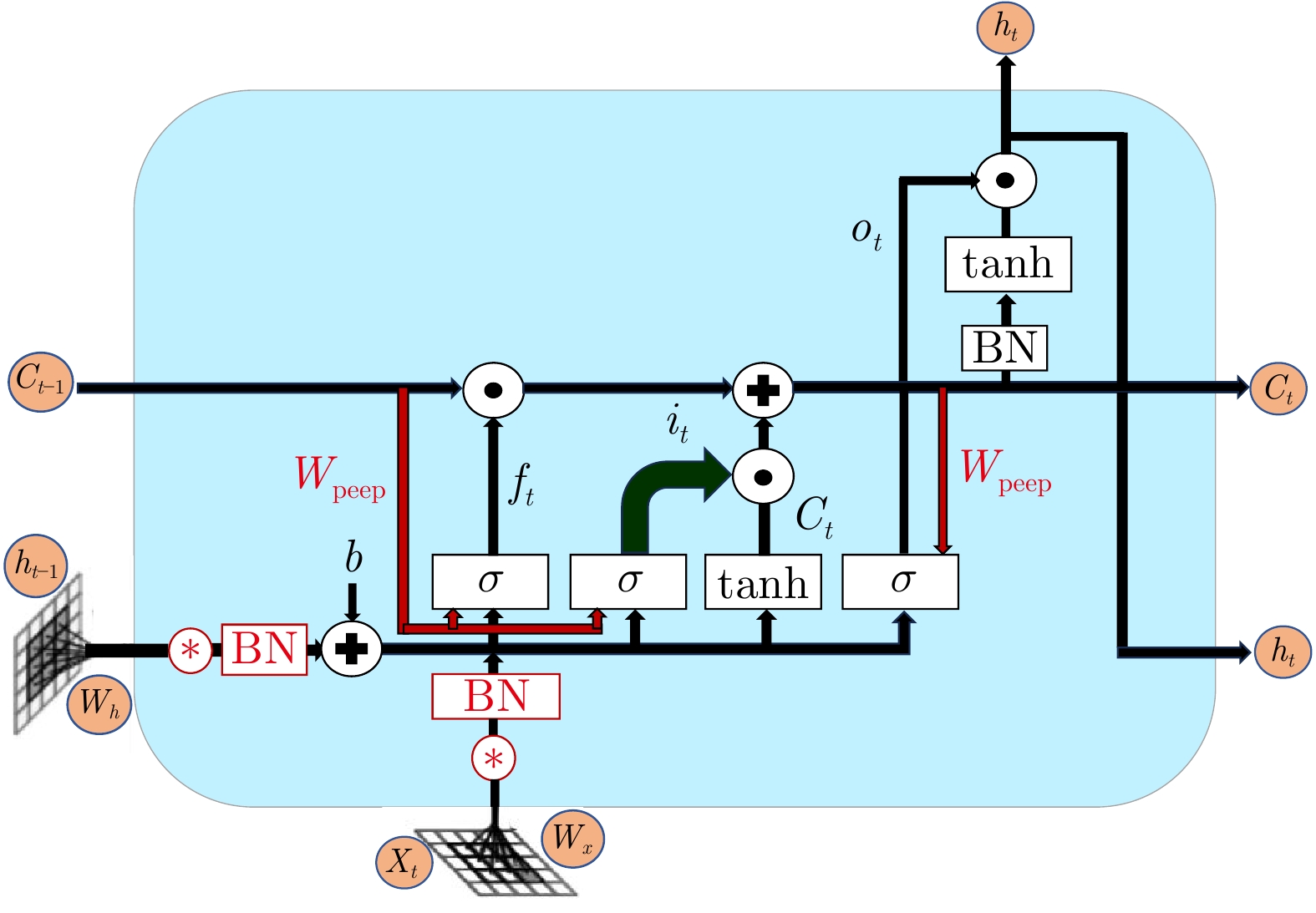
摘要: 在铝电解过程中, 阳极效应是影响电能利用效率的典型异常工况, 其发生往往伴随阳极电阻的剧烈波动. 若能实现阳极电阻变化的实时预测, 即可对阳极效应进行前瞻性识别. 为此, 提出一种融合机理约束与数据驱动思想的多通道时空预测模型(卷积长短期记忆–二维卷积–多头注意力, ConvLSTM-Conv2D-MHA), 以联合刻画多槽系统的共性与差异特征. 模型利用堆叠ConvLSTM提取时序动态, 通过Conv2D分支强化空间特征表达, 并引入MHA机制捕捉长时依赖关系, 从而提升对趋势变化及早期波动的敏感度. 实验结果表明, 该模型在阳极电阻趋势预测中表现出更高的精度与稳定性, 较传统时序模型更能利用多槽间潜在的耦合关联.
-
关键词:
- 电阻趋势预测 /
- 多通道ConvLSTM /
- 多头注意力机制 /
- 阳极效应
Abstract: In the process of aluminum electrolysis, the anode effect is a typical abnormal operating condition that affects electrical energy utilization efficiency and is usually accompanied by sharp fluctuations in anode resistance. Real-time prediction of anode resistance variations enables proactive identification of anode effects. To address this issue, a multi-channel spatiotemporal prediction model integrating convolutional long short-term memory (ConvLSTM), two-dimensional convolution (Conv2D), and multi-head attention (MHA), namely ConvLSTM-Conv2D-MHA, is proposed by combining mechanism constraints with data-driven principles to jointly capture both the commonalities and differences within multiple cell systems. The model employs stacked ConvLSTM to extract temporal dynamics, utilizes a Conv2D branch to enhance spatial feature representation, and incorporates MHA mechanism to capture long-term dependencies, thereby improving sensitivity to trend changes and early-stage fluctuations. Experimental results demonstrate that the proposed model achieves higher accuracy and stability in anode resistance trend prediction and is more effective than conventional time-series models in exploiting the potential coupling relationships among multiple cells. -
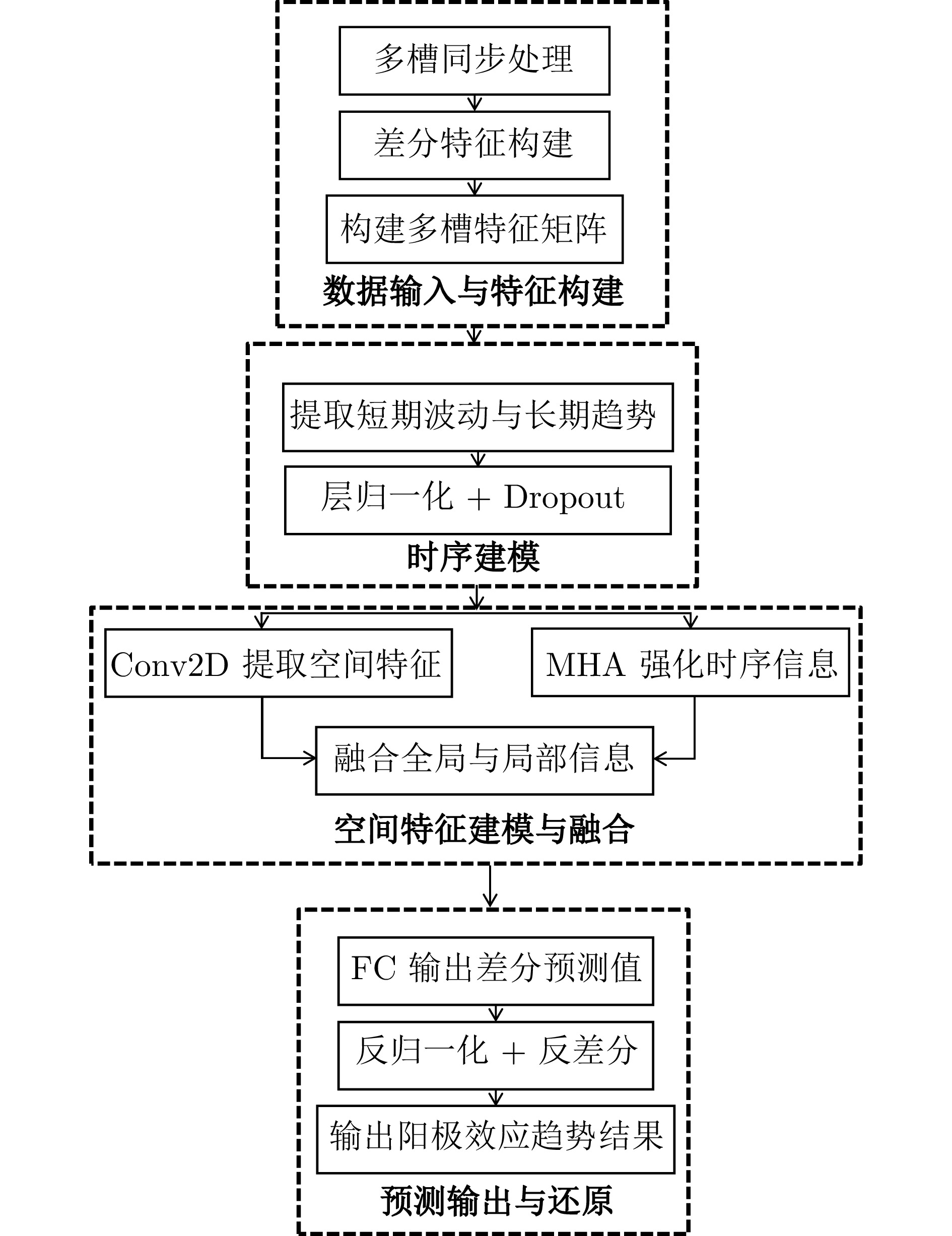
图 6 基于阳极电阻的阳极效应趋势预测方法流程
Fig. 6 Flowchart of anode effect trend prediction method based on anode resistance
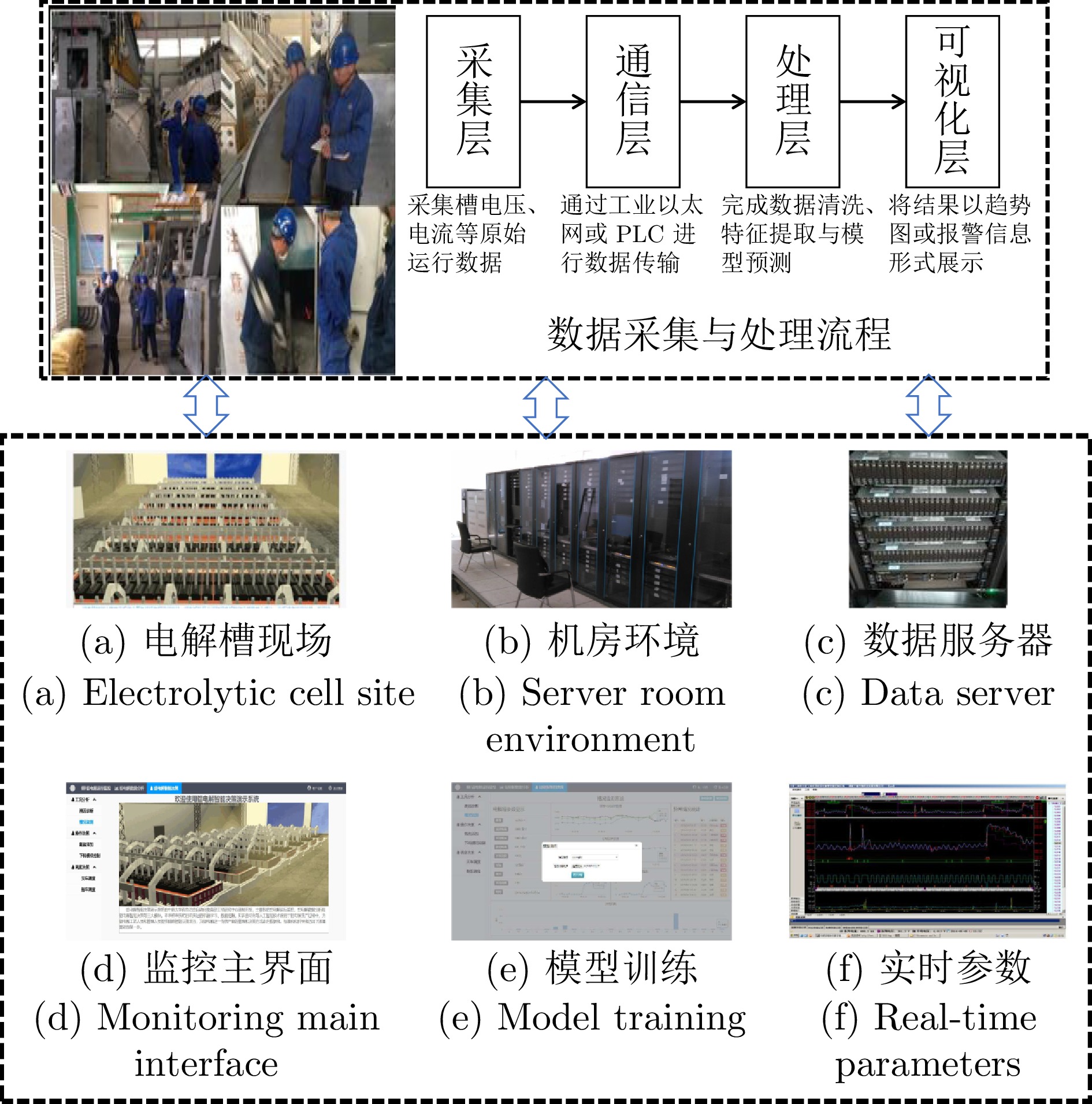
图 7 铝电解数据采集与处理系统示意图
Fig. 7 Schematic diagram of aluminum electrolysis data collection and processing system
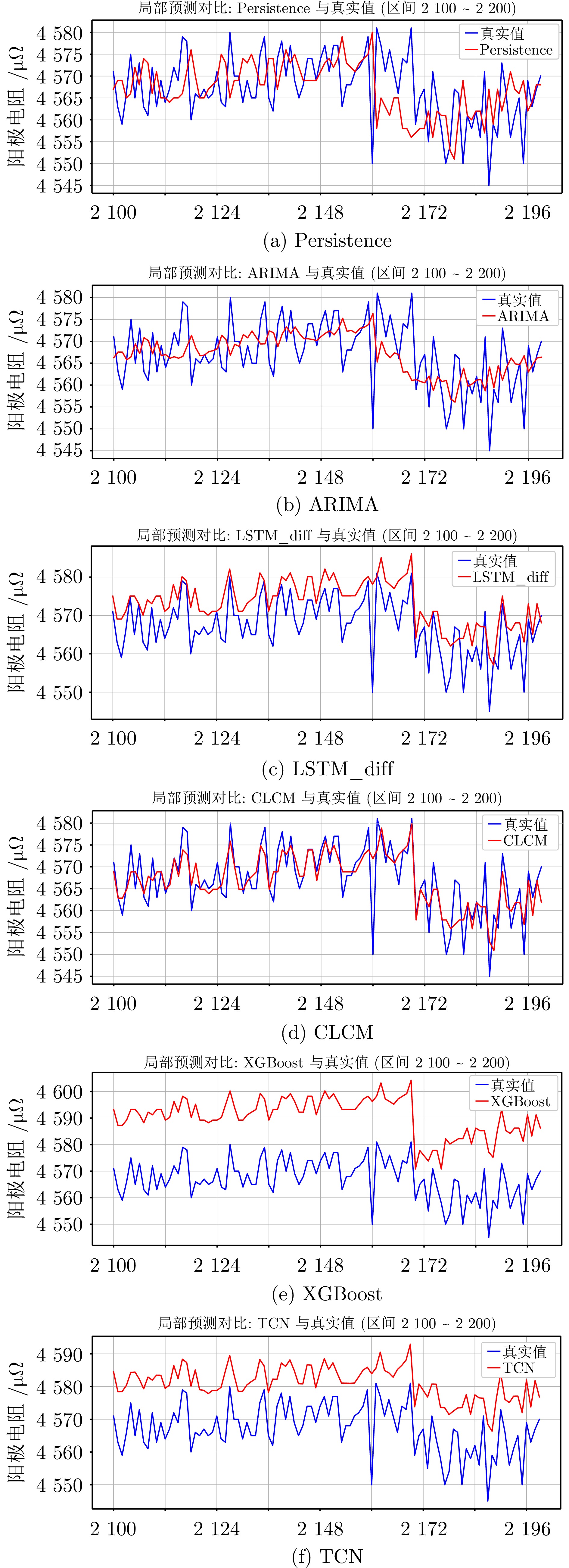
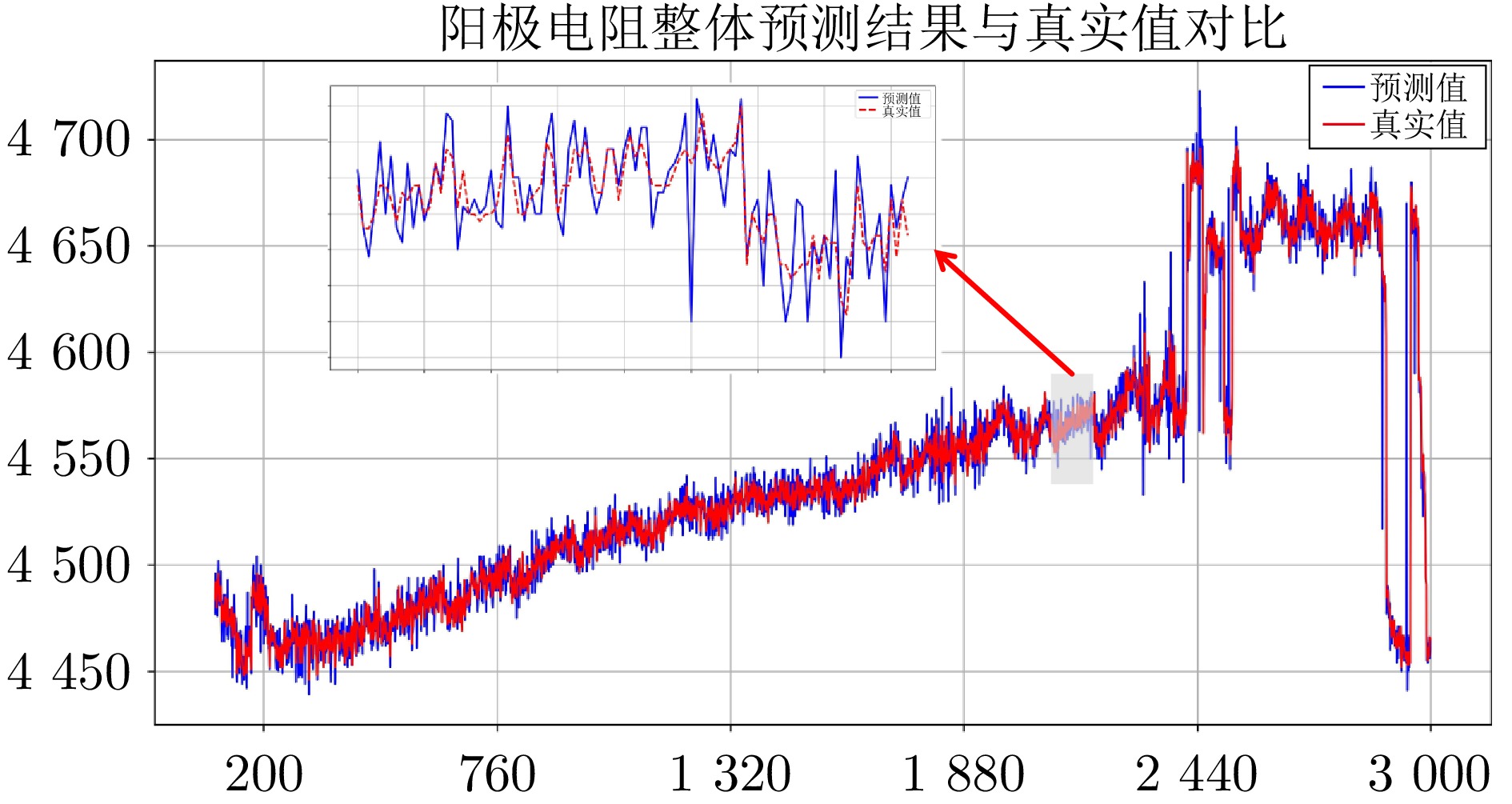
图 13 不同模型在局部区间的预测结果对比
Fig. 13 Comparison of prediction results of different models in local intervals
表 1 模型输入参数
Table 1 Model input parameters
序号 参数 描述 1 槽电压 电解槽电解质熔体中的总电压降 2 滤波电阻 电解槽中过滤系统的电阻 3 平滑电阻 电解槽电解质层的电阻 4 波动差值 电解槽电压或电流波动幅度 5 斜率数据总和 电压或电流变化的速率 6 槽龄 电解槽已运行的时间 7 额外喂料量 电解槽中添加氟盐和三氧化二铝量  下载: 导出CSV
表 2 实验数据集信息
Table 2 Experimental dataset information
参数 数值 数据产生时间 2016年6月25日至
2016年6月28日电解槽数量 3 特征数量 7 实验数据样本数 34 560 训练集/验证集/测试集占比 28 404 : 3 156 : 3 000
下载: 导出CSV
表 3 CLCM模型参数
Table 3 Parameters of CLCM model
参数 数值 卷积层 3 卷积核大小 1 × 3 移动步长 1 ConvLSTM层隐藏单元数 30 初始学习率 0.001 最大迭代次数 100 批量大小batch 64
下载: 导出CSV
表 4 CLCM模型性能评价结果
Table 4 Performance evaluation results of CLCM model
参数 数值 RMSE 8.485 MAPE 0.097% R2 0.982
下载: 导出CSV
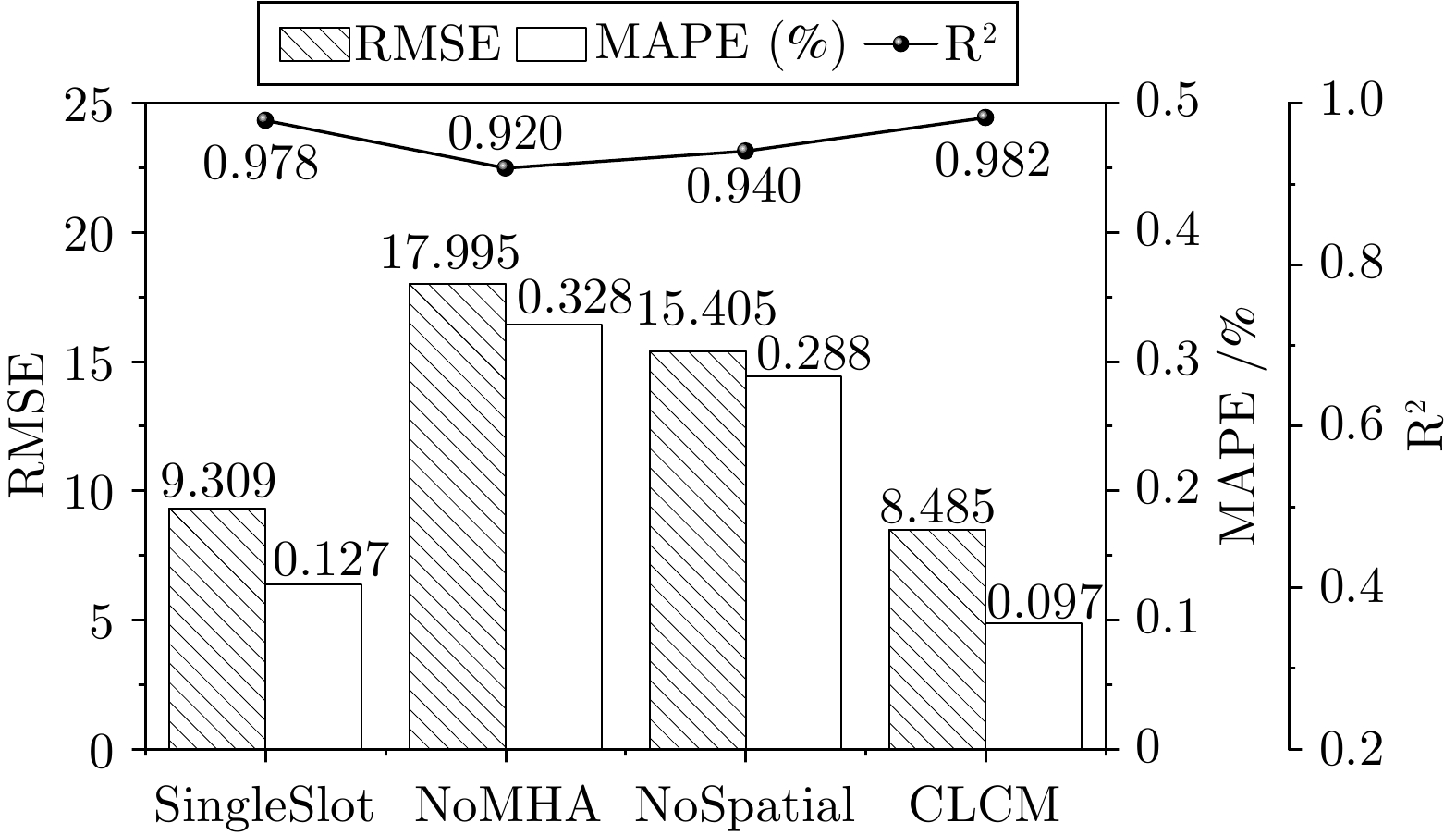
表 5 单一模型和融合模型性能对比
Table 5 Performance comparison between single model and fusion model
模型 RMSE R2 MAPE (%) SingleSlot 9.309 0.978 0.127 NoMHA 17.995 0.920 0.328 NoSpatial 15.405 0.940 0.288 CLCM 8.485 0.982 0.097
下载: 导出CSV
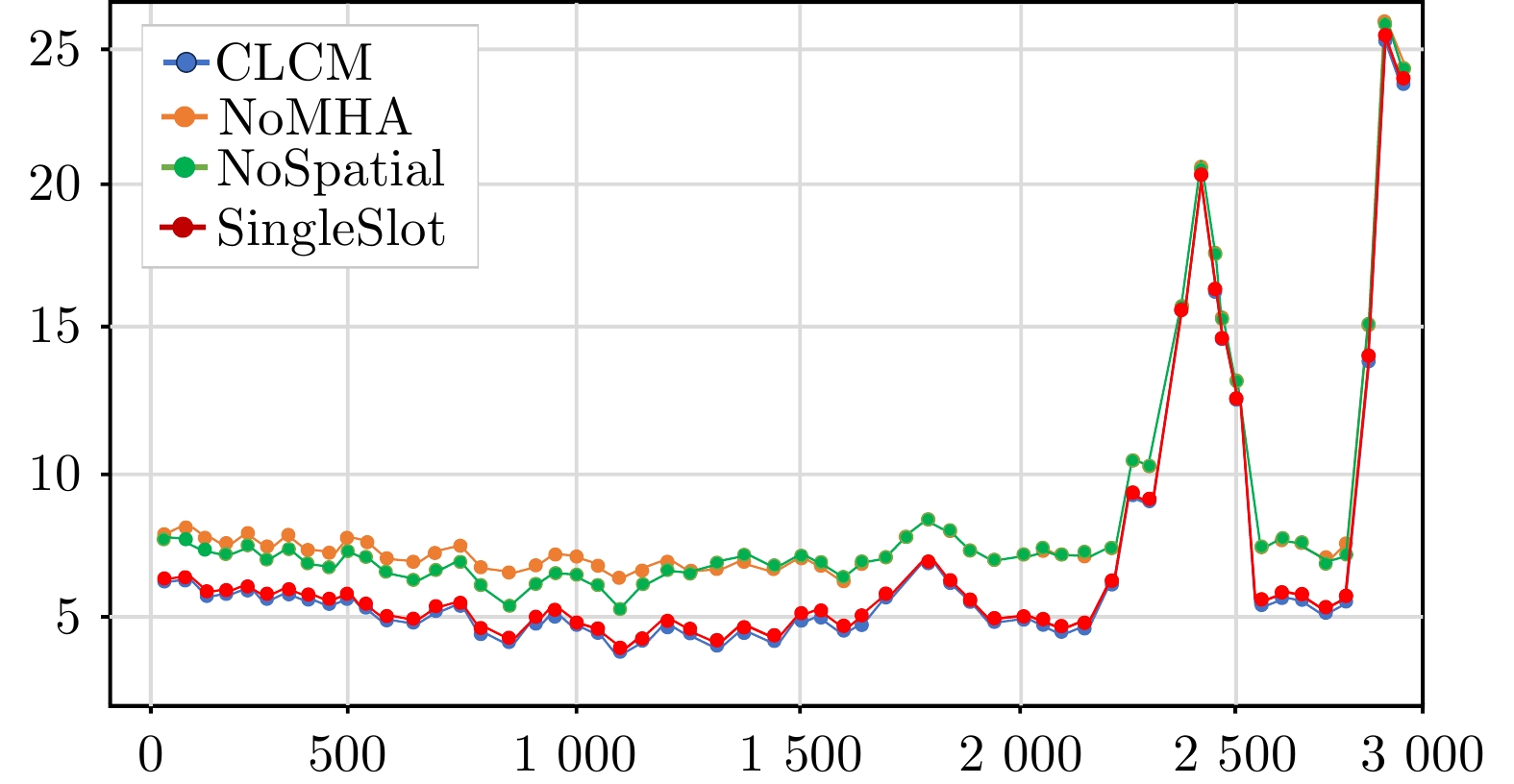
表 6 消融实验模型局部RMSE显著性检验结果
Table 6 Significance test results of local RMSE for ablation experiment models
对比模型 t值 p值 显著性(p < 0.05) CLCM与NoMHA −27.150 < 0.001 显著 CLCM与NoSpatial −24.163 < 0.001 显著 CLCM与SingleSlot −22.544 < 0.001 显著
下载: 导出CSV
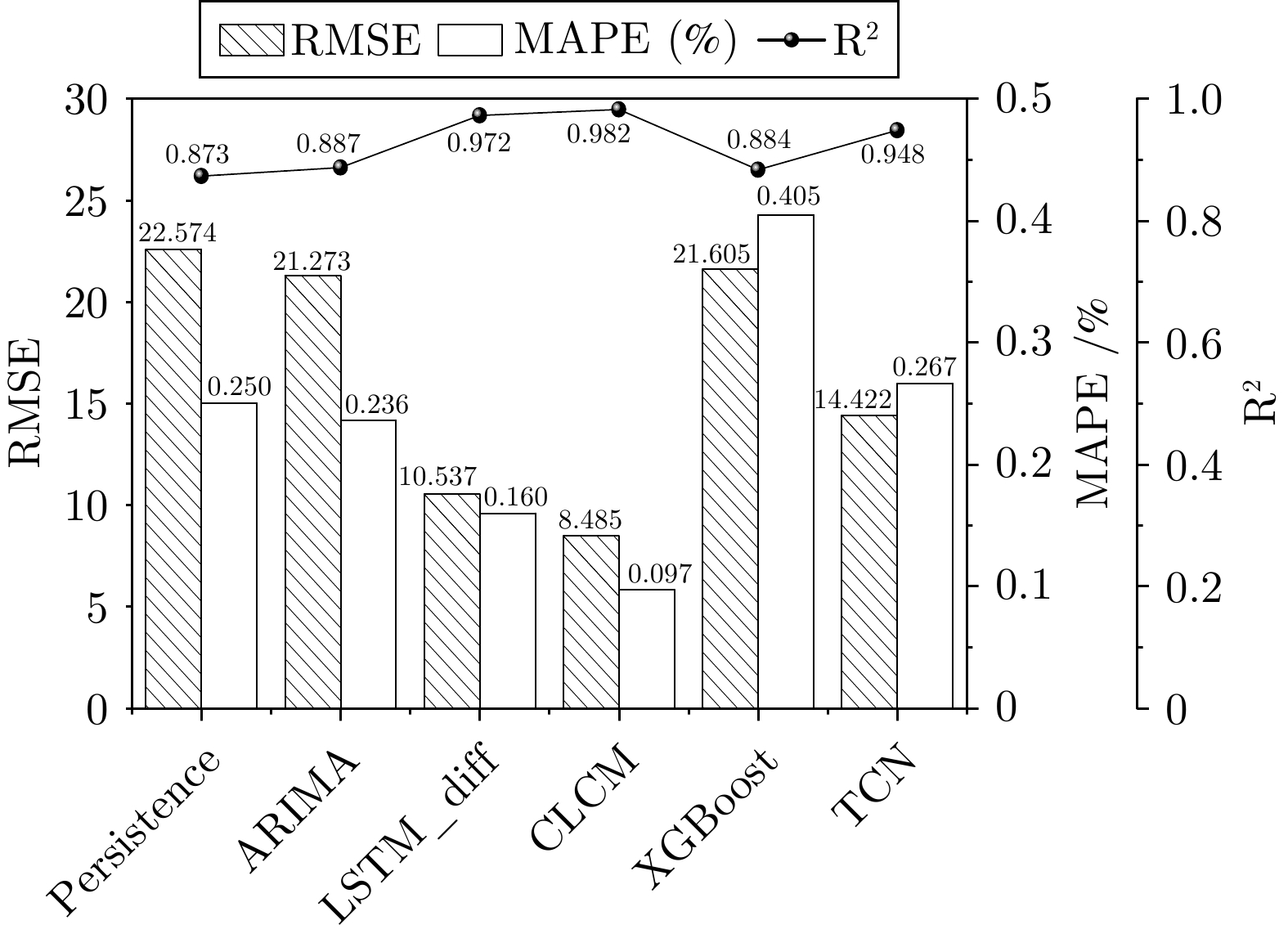
表 7 不同方法预测评价结果
Table 7 Prediction evaluation results of different methods
模型 RMSE R2 MAPE (%) Persistence 22.574 0.873 0.250 ARIMA 21.273 0.887 0.236 LSTM_diff 10.537 0.972 0.160 XGBoost 21.605 0.884 0.405 TCN 14.422 0.948 0.267 CLCM 8.485 0.982 0.097
下载: 导出CSV
表 8 各模型相对于CLCM的DM显著性检验结果
Table 8 DM significance test results of each model relative to CLCM
对比模型 t值 p值 显著性(p < 0.05) CLCM与LSTM_diff −11.928 < 0.001 显著 CLCM与ARIMA −7.482 < 0.001 显著 CLCM与Persistence −7.919 < 0.001 显著 CLCM与XGBoost −56.812 < 0.001 显著 CLCM与TCN −59.111 < 0.001 显著
下载: 导出CSV
-
[1] 桂卫华, 岳伟超, 谢永芳, 张红亮, 阳春华. 铝电解生产智能优化制造研究综述. 自动化学报, 2018, 44(11): 1957−1970 doi: 10.16383/j.aas.2018.c180198Gui Wei-Hua, Yue Wei-Chao, Xie Yong-Fang, Zhang Hong-Liang, Yang Chun-Hua. Review on intelligent optimization and manufacturing of aluminum electrolysis production. Acta Automatica Sinica, 2018, 44(11): 1957−1970 doi: 10.16383/j.aas.2018.c180198 [2] Wang J, Xie Y F, Xie S W, Chen X F. Development of data-knowledge-driven predictive model and multi-objective optimization for intelligent optimal control of aluminum electrolysis process. Engineering Applications of Artificial Intelligence, 2024, 134: Article No. 108664 doi: 10.1016/j.engappai.2024.108664 [3] Yin G, Li Y H, Yan F Y, Quan P C, Wang M, Cao W Q, et al. Deep learning for electrolysis process anode effect prediction based on long short-term memory network and stacked denoising autoencoder. Rare Metals, 2024, 43(12): 6730−6741 doi: 10.1007/s12598-024-02766-x [4] 叶涛, 朱学峰, 李向阳, 史步海. 基于改进k-最近邻回归算法的软测量建模. 自动化学报, 2007, 33(9): 996−999 doi: 10.16383/j.aas.2007.09.018Ye Tao, Zhu Xue-Feng, Li Xiang-Yang, Shi Bu-Hai. Soft sensor modeling based on improved k-nearest neighbor regression algorithm. Acta Automatica Sinica, 2007, 33(9): 996−999 doi: 10.16383/j.aas.2007.09.018 [5] Melo A, Camara M M, Pinto J C. Data-driven process monitoring and fault diagnosis: A comprehensive survey. Processes, 2024, 12(2): Article No. 251 doi: 10.3390/pr12020251 [6] Li S J, Zhou B H, Shang J L, Chen X F, Yu J B. Review of recent applications and future perspectives on process monitoring approaches in industrial processes. Journal of Manufacturing Systems, 2025, 82: 509−530 doi: 10.1016/j.jmsy.2025.07.002 [7] Zhang S, Zhang T, Yin Y X, Xiao W D. Alumina concentration detection based on the kernel extreme learning machine. Sensors, 2017, 17(9): Article No. 2002 doi: 10.3390/s17092002 [8] Xu C H, Tu Z C, Zhang W J, Cen J, Xiong J B, Wang N. A method of optimizing cell voltage based on STA-LSSVM model. Mathematics, 2022, 10(24): Article No. 4710 doi: 10.3390/math10244710 [9] 汤健, 郭海涛, 夏恒, 王鼎, 乔俊飞. 面向工业过程的图像生成及其应用研究综述. 自动化学报, 2024, 50(2): 211−240 doi: 10.16383/j.aas.c230126Tang Jian, Guo Hai-Tao, Xia Heng, Wang Ding, Qiao Jun-Fei. Image generation and its application research for industrial process: A survey. Acta Automatica Sinica, 2024, 50(2): 211−240 doi: 10.16383/j.aas.c230126 [10] Li Q S, Zhang Y, Long J H, Bai H, Hu R, Li W. Photovoltaic power prediction based on IMFO-LSTM model. Journal of Electric Power Science and Technology, 2024, 39(3): 199−206 [11] Xu J Y, Gong J Y, Li Y B, Fu Z, Wang L Y. Surf-riding and broaching prediction of ship sailing in regular waves by LSTM based on the data of ship motion and encounter wave. Ocean Engineering, 2024, 297: Article No. 117010 doi: 10.1016/j.oceaneng.2024.117010 [12] Lughofer E, Pichler K. Data-driven prediction of possible quality deterioration in injection molding processes. Applied Soft Computing, 2024, 150: Article No. 111029 doi: 10.1016/j.asoc.2023.111029 [13] Zhao L, Zhang X N, Peng X Y. Power fluctuation mitigation strategy for microgrids based on an LSTM-based power forecasting method. Applied Soft Computing, 2022, 127: Article No. 109370 doi: 10.1016/j.asoc.2022.109370 [14] He Y L, Lv S H, Zhu Q X, Lu S. Novel multiattribute space-based LSTM for industrial soft sensor applications. IEEE Transactions on Industrial Informatics, 2024, 20(3): 4745−4752 doi: 10.1109/TII.2023.3316289 [15] Tian H X, Chen J H. Deep learning with spatial attention-based ConvLSTM for SOC estimation of lithium-ion batteries. Processes, 2022, 10(11): Article No. 2185 doi: 10.3390/pr10112185 [16] 张舒, 徐鉴. 时滞耦合系统非线性动力学的研究进展. 力学学报, 2017, 49(3): 565−587 doi: 10.6052/0459-1879-17-123Zhang Shu, Xu Jian. Review on nonlinear dynamics in systems with coupling delays. Chinese Journal of Theoretical and Applied Mechanics, 2017, 49(3): 565−587 doi: 10.6052/0459-1879-17-123 [17] Zhang Y D, Jie J, Liu L Q, Lan C M, Shi P. STP-cube-multivariate time series forecasting based on spatiotemporal correlations and periodicity. Neural Processing Letters, 2025, 57(5): Art-icle No. 80 doi: 10.1007/s11063-025-11799-x [18] Chen Z G, Lu M, Zhou Y M, Chen C Y. Information-synergy-entropy based multi-feature information fusion for the operating condition identification in aluminium electrolysis. Information Sciences, 2021, 548: 275−294 doi: 10.1016/j.ins.2020.07.031 [19] Ilyushin Y V, Boronko E A. Analysis of energy sustainability and problems of technological process of primary aluminum production. Energies, 2025, 18(9): Article No. 2194 doi: 10.3390/en18092194 [20] Sun Y, Gui W H, Chen X F, Xie Y F. Evaluation model of aluminum electrolysis cell condition based on multi-source heterogeneous data fusion. International Journal of Machine Learning and Cybernetics, 2024, 15(4): 1375−1396 doi: 10.1007/s13042-023-01973-9 [21] da Silva M L J, Besancon G, Ferrante F, Fiacchini M, Roustan H. Convection-diffusion model for alumina concentration in Hall-Héroult process. IFAC-PapersOnLine, 2022, 55(21): 150−155 doi: 10.1016/j.ifacol.2022.09.259 [22] Wan R Z, Mei S P, Wang J, Liu M, Yang F. Multivariate temporal convolutional network: A deep neural networks approach for multivariate time series forecasting. Electronics, 2019, 8(8): Article No. 876 doi: 10.3390/electronics8080876 [23] Yuan Q, Wei Z Q, Guan X, Jiang M J, Wang S, Zhang S G, et al. Toxicity prediction method based on multi-channel convolutional neural network. Molecules, 2019, 24(18): Article No. 3383 doi: 10.3390/molecules24183383 [24] Rosato A, Araneo R, Andreotti A, Succetti F, Panella M. 2-D convolutional deep neural network for the multivariate prediction of photovoltaic time series. Energies, 2021, 14(9): Article No. 2392 doi: 10.3390/en14092392 [25] Qiu J, Zhang Z D, Zhu Z H, Luo C Q. Accurate state of charge estimation for lithium-ion batteries using a temporal convolutional network and bidirectional long short-term memory hybrid model. Batteries, 2026, 12(2): Article No. 50 doi: 10.3390/batteries12020050 [26] Ozcan A, Catal C, Kasif A. Energy load forecasting using a dual-stage attention-based recurrent neural network. Sensors, 2021, 21(21): Article No. 7115 doi: 10.3390/s21217115 [27] Sakib S, Mahadi M K, Abir S R, Moon A M, Shafiullah A, Ali S, et al. Attention-based models for multivariate time series forecasting: Multi-step solar irradiation prediction. Heliyon, 2024, 10(6): Article No. e27795 doi: 10.1016/j.heliyon.2024.e27795 [28] Li S Y, Jin X Y, Xuan Y, Zhou X Y, Chen W H, Wang Y X, et al. Enhancing the locality and breaking the memory bottleneck of Transformer on time series forecasting. In: Proceedings of the 29th Annual Conference on Neural Information Processing Systems. Vancouver, Canada: Advances in Neural Information Processing Systems, 2019. 5244–5254 [29] Shi X J, Chen Z R, Wang H, Yeung D Y, Wong W K, Woo W C. Convolutional LSTM network: A machine learning approach for precipitation nowcasting. In: Proceedings of the 29th Annual Conference on Neural Information Processing Systems. Montreal, Canada: Advances in Neural Information Processing Systems, 2015. 802–810 [30] Cui G, Hu T, Zhang W, Bao H J. MMTransformer: A multivariate time-series resource forecasting model for multi-component applications. Scientific Reports, 2025, 15: Article No. 29740 doi: 10.1038/s41598-025-07162-8 -

 下载:
下载:

计量
- 文章访问数: 410
- HTML全文浏览量: 211
- PDF下载量: 80
- 被引次数: 0
